

Dental Treatment During Pregnancy: 5 Beliefs Chennai Families Bring Us, and What We Tell Expecting Mothers
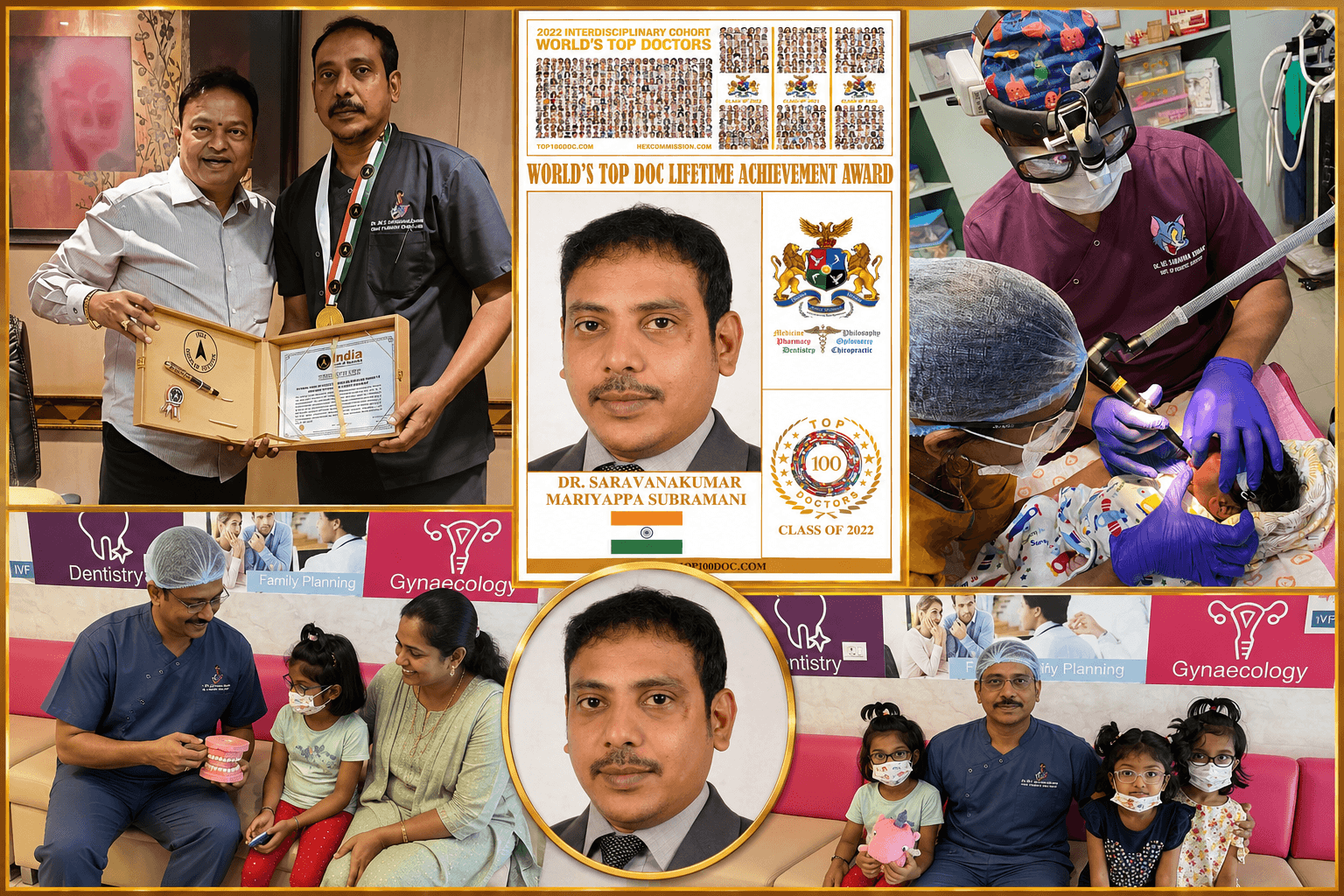
Medically reviewed by Prof. Dr. M. S. Saravanakumar, MDS (Pediatric Dentistry), Kannmani Dental Home, CIT Nagar, Chennai · Published 12/11/2026
“Wait until the baby comes, then see the dentist.” Many expecting mothers in Chennai hear this from family, and they come to believe that dental treatment during pregnancy will harm the baby. So a painful tooth is left alone for months, bleeding gums are put down to pregnancy, and an X-ray is refused out of fear for the baby.
Prof. Dr. M. S. Saravanakumar is a paediatric dentist at Kannmani Dental Home, CIT Nagar, and he sees pregnant and breastfeeding mothers as well as children. His reason is simple: a baby’s teeth begin with the mother’s mouth.
Below are the five beliefs he hears most often, what he does for expecting mothers, and what published guidance says about dental treatment during pregnancy.
Is dental treatment safe during pregnancy?
Yes. The American College of Obstetricians and Gynecologists (ACOG) advises that dental care is safe and important during pregnancy, and that needed treatment such as fillings and root canals should not be put off.
Cleaning, dental X-rays and local anaesthesia can all be used. Prof. Dr. Saravanakumar plans each treatment with the mother’s gynaecologist, chooses the timing carefully, and keeps the visit comfortable and calm.
[IMAGE: simple illustration of a pregnant woman sitting upright in a dental chair, with a pillow behind her back. No photo of a real patient. ALT: “Pregnant woman seated upright in a dental chair, dental treatment during pregnancy”]
Which trimester is best for dental treatment?
“As everyone knows, the second trimester is the safest trimester to do a treatment,” Prof. Dr. Saravanakumar says. This is how he plans care through pregnancy:
- First trimester (months 1 to 3): he usually plans routine procedures for later, and treats an emergency such as severe pain or infection straight away.
- Second trimester (months 4 to 6): the preferred time for cleaning, fillings and other needed treatment.
- Third trimester (months 7 to 9): planned work is kept short and comfortable so the mother is not stressed, and treatment that is clinically needed is still given.
An emergency is treated whenever it happens. He has carried out root canal treatment in the first and third trimesters for mothers in severe pain, with the gynaecologist’s advice. His timing is a planning preference, not a sign that care is unsafe early on.
ACOG and the American Dental Association advise that dental care is safe at any stage of pregnancy, and that delaying needed treatment can lead to more complex problems.
Belief 1: “No dental treatment until the baby is born”
This is the belief he meets most, and in his words it is a myth. Treatment can be done in pregnancy with proper guidance and assessment by the gynaecologist.
That last part matters to him. Before any treatment, an X-ray or even a small cleaning, he checks with the mother’s gynaecologist. “We know our limits,” he says.
Leaving a problem alone has its own cost: a small cavity can grow into a painful infection.
Belief 2: “A dental X-ray will harm the baby”
Prof. Dr. Saravanakumar calls this a myth too. The exposure from a dental X-ray is very small, and it is aimed at the teeth, far from the womb. He compares it with the natural radiation people receive on a flight.
RadiologyInfo, a patient site run by two radiology societies, puts a single dental X-ray at about the same as one day of the natural background radiation everyone receives.
He also points out that a lead apron is no longer considered necessary. In 2024, the American Dental Association advised that lead aprons and thyroid collars are no longer needed during dental X-rays, for all patients including pregnant women.
Modern digital equipment and a narrow beam already protect the rest of the body. An X-ray is still taken only when it is needed to decide treatment, and he informs the gynaecologist.
Belief 3: “The numbing injection is not safe in pregnancy”
Many mothers are willing to have a tooth treated but worry about the injection. Prof. Dr. Saravanakumar uses a numbing gel on the gum, a local anaesthetic spray, or a local anaesthetic injection (lignocaine, the anaesthetic most commonly used in dentistry), again with the gynaecologist’s consent.
The national consensus statement on oral health in pregnancy, developed with ACOG and the American Dental Association, advises reassuring pregnant women that local anaesthesia, X-rays and pain medicine used in dental care are safe throughout pregnancy. Any medicine after treatment is chosen with the gynaecologist.
Belief 4: “Bleeding gums are normal in pregnancy”
Bleeding gums are common in pregnancy, but common does not mean they should be ignored. Prof. Dr. Saravanakumar explains that most of it is pregnancy gingivitis: hormone changes make the gums react more strongly to plaque, so they swell and bleed easily when brushing.
According to the US Centers for Disease Control and Prevention, 60 to 75% of pregnant women have gingivitis. ACOG notes that it usually peaks in the third trimester, and is worse in women who already had gum problems before pregnancy.
Bleeding can also come from gum disease, calculus (hardened plaque) or dirt around the teeth that was never cleaned properly. So he examines the gums rather than assuming. Depending on what he finds, he may advise medicine or a professional cleaning (scaling).
How he keeps a pregnant mother comfortable in the chair
He does not recline the dental chair too far. The mother sits in a comfortable, more upright position, and he keeps the visit calm and unhurried. Published dental guidance gives the reason.
Lying flat on the back in later pregnancy can press on a large blood vessel and make a woman dizzy, so a raised head and a slight tilt to the left side are advised.
Belief 5: “Teeth become loose after every delivery”
Some families say a woman loses a tooth for every baby. Prof. Dr. Saravanakumar says it is not so. In his view, teeth that feel loose after delivery may be a sign of a gum (periodontal) problem that needs attention, and the story has spread into a belief.
ACOG explains that the ligaments and bone that hold the teeth can loosen slightly during pregnancy, making teeth a little more mobile for a while. There is normally no tooth loss unless something else is wrong. What does lead to loose teeth and tooth loss is gum disease that is left untreated, which is one more reason to have bleeding gums checked.
Morning sickness: why you should not brush straight after vomiting
Prof. Dr. Saravanakumar advises against brushing straight after vomiting, because it can damage the teeth and gums. Stomach acid softens the surface of the teeth for a while, and brushing at that moment can wear the enamel away.
Instead, rinse your mouth with plain water, as NHS dental services advise, and brush later. ACOG adds that rinsing with a teaspoon of baking soda dissolved in a cup of water can help neutralise the acid.
Your mouth and your baby’s teeth are closely connected
“Mother’s mouth and baby is […] connected,” Prof. Dr. Saravanakumar says, and he explains it in two ways. When germs pass from the mother to the baby, dentists call it vertical transmission. When they pass from the father or other family members, for example through shared toothbrushes or brushes kept touching each other, it is horizontal transmission.
The American Academy of Pediatric Dentistry explains that mothers with high levels of cavity-causing bacteria are more likely to pass them to their children, raising the child’s risk of early tooth decay.
Lowering these bacteria in the mother’s mouth during pregnancy helps delay the baby picking them up. ACOG makes the same point about everyday habits such as sharing spoons.
This is why he talks of the first 1,000 days, from pregnancy to the child’s second birthday, as the foundation for the child’s oral health and overall health. “If the mother has a very clean oral hygiene, no cavities and no other infection in the mouth, the baby has very good benefits of not getting any cavities in future,” he says.
A healthy mouth in the mother lowers the baby’s risk; it does not guarantee a cavity-free child, because the baby’s diet, brushing and fluoride matter too. Expecting mothers who wish can have an oral health counselling session with him. It covers their own teeth and gums, breastfeeding, how to care for the milk teeth when they come, and habits to avoid so the baby’s teeth grow in well.
Planning a baby? See the dentist first
Prof. Dr. Saravanakumar’s first advice is prevention: have a scaling and any fillings done before you plan a pregnancy. A clean, healthy mouth at the start means fewer problems to manage later.
A pattern he sees often: the wisdom tooth left for later
When he finds an impacted wisdom tooth (one stuck in the jaw) that is likely to cause trouble, he advises having it removed before planning a pregnancy. Such a tooth can flare up with severe pain, swelling or infection, and removing it is a more involved procedure that is harder on the mother late in pregnancy, so he prefers to deal with it beforehand. Yet many women still come to him in the third trimester with exactly this problem, after being advised earlier. It is a common story, and an avoidable one.
Does treating gum disease prevent preterm birth?
Some studies have linked gum disease in pregnancy with preterm birth, but research has not shown that treating it prevents preterm birth. A Cochrane review of 15 trials found no clear difference in babies born early when gum disease was treated during pregnancy, though it may slightly reduce low birth weight.
ACOG states that treating gum disease during pregnancy is safe and improves the mother’s oral health. So treat it for your own health and comfort, and do not let fear for the baby stop you.
After the baby arrives
Dental treatment while breastfeeding
Yes, you can. Prof. Dr. Saravanakumar also sees breastfeeding mothers for their own teeth. The US National Library of Medicine’s LactMed database reports that only very small amounts of lignocaine reach breast milk after dental injections. Tell your dentist you are breastfeeding, so any medicine afterwards suits you both.
Your baby’s first dental visit
Bring your baby as early as possible: when the first tooth comes through, and no later than the first birthday. At that visit he guides parents on teething, what to do when milk teeth fall, oral habits such as thumb sucking, mouth breathing and tongue thrusting, and injuries. If a milk tooth falls out with a little bleeding, press a clean, cold cloth on the spot. If a milk tooth is knocked out in a fall, do not push it back into the gum; international dental trauma guidelines advise that milk teeth should not be put back. See a dentist instead.
Our guide to teething in babies covers the first teeth in detail, and our guide to tooth decay in milk teeth explains what happens when decay is missed.
Frequently asked questions
Can I get a root canal while pregnant?
Yes, when it is needed. ACOG lists root canals among treatments that should not be delayed in pregnancy. Prof. Dr. Saravanakumar prefers the second trimester for planned work, and treats severe pain in any trimester with the gynaecologist’s advice.
Is teeth cleaning safe in the first trimester?
Yes. Cleaning is safe at any stage of pregnancy. Prof. Dr. Saravanakumar usually plans routine cleaning for the second trimester, as a matter of timing rather than safety. If your gums are bleeding or painful early in pregnancy, see a dentist rather than waiting.
Does tooth pain in pregnancy mean a boy or a girl?
No. Tooth pain or bleeding gums in pregnancy do not tell you the baby’s sex. They come from changes in the mouth, such as gum inflammation, a cavity or an infected tooth, and they should be checked by a dentist.
கர்ப்ப காலத்தில் பல் சிகிச்சை செய்யலாமா? (Can I have dental treatment during pregnancy?)
செய்யலாம். தேவையான பல் சிகிச்சையைக் கர்ப்ப காலத்தில் தள்ளிப்போட வேண்டியதில்லை. திட்டமிட்ட சிகிச்சைக்கு இரண்டாவது மூன்று மாதங்கள் (4 முதல் 6 மாதம்) ஏற்ற காலம். உங்கள் மகப்பேறு மருத்துவரின் ஆலோசனையுடன் பல் மருத்துவர் சிகிச்சையைத் திட்டமிடுவார்.
In English: yes. Needed dental treatment does not have to wait. Months 4 to 6 are the preferred time for planned treatment, and the dentist plans it with your gynaecologist’s advice.
Dental care for expecting mothers at Kannmani Dental Home, CIT Nagar, Chennai
Kannmani Dental Home is a dental clinic in CIT Nagar, Chennai, focused mainly on children’s dentistry, and it also sees pregnant and breastfeeding mothers. It is led by Prof. Dr. M. S. Saravanakumar, MDS (Pediatric Dentistry), who has 19 years of experience in paediatric dentistry.
For expecting mothers, the clinic offers a consultation with scaling and anticipatory guidance for the baby to come, at ₹1,500. A consultation alone is ₹500 to ₹1,000. Please bring details of your pregnancy and your gynaecologist’s contact, so treatment can be planned together.
Kannmani Dental Home
3/63, 5th Main Road, CIT Nagar, Chennai 600035
Phone: 91763 16667
Open every day, 10 AM to 9 PM
Book a consultation
This article is for general information and does not replace an examination by a dentist or advice from your gynaecologist. If you have severe pain, facial swelling or fever during pregnancy, seek care straight away.
How this article was prepared: The medical content in this article is based on Prof. Dr. M. S. Saravanakumar’s own clinical experience and the reliable published sources cited below.
Sources
- American College of Obstetricians and Gynecologists. Oral health care during pregnancy and through the lifespan. Committee Opinion No. 569, 2013, reaffirmed 2025. acog.org
- Oral Health Care During Pregnancy Expert Workgroup. Oral health care during pregnancy: a national consensus statement (guidance for oral health professionals). National Maternal and Child Oral Health Resource Center, 2012. mchoralhealth.org
- American Dental Association. ADA releases updated recommendations to enhance radiography safety in dentistry, 2024. ada.org
- ADA News. Using thyroid collars during radiographic exams no longer recommended by ADA, 2024. adanews.ada.org
- RadiologyInfo.org (RSNA and ACR). Radiation dose in X-ray and CT exams. radiologyinfo.org
- Evearitt A. The reality of dental radiation. Journal of the Colorado Dental Association, 2016. cdaonline.org
- ADA News. Pregnancy increases risk of gum disease (CDC figure on gingivitis). adanews.ada.org
- Dental care during pregnancy: positioning in later pregnancy. Inside Dental Hygiene. idh.cdeworld.com
- Oxford Health NHS Foundation Trust, Oxfordshire Community Dental Service. Oral health in pregnancy. oxfordhealth.nhs.uk
- American Academy of Pediatric Dentistry. Guideline on perinatal oral health care. aapd.org
- Iheozor-Ejiofor Z, Middleton P, Esposito M, Glenny AM. Treating periodontal disease for preventing adverse birth outcomes in pregnant women. Cochrane Database of Systematic Reviews 2017, Issue 6. cochrane.org
- Drugs and Lactation Database (LactMed). Lidocaine. US National Library of Medicine. ncbi.nlm.nih.gov
- Day PF, Flores MT, O’Connell AC, et al. International Association of Dental Traumatology guidelines for the management of traumatic dental injuries: 3. Injuries in the primary dentition. Dental Traumatology 2020;36(4):343-359. aapd.org








Leave a Reply
Want to join the discussion?Feel free to contribute!