Kannmani Dental Home
  • Home
  • About Us
  • Dr.Saravanakumar
  • Services
  • Gallery
    • Photos
    • Videos
  • Contact Us
  • Reviews
  • Privacy Policy
  • Videos
  • Blog
  • Menu Menu
Sedation dentistry for kids using a laughing gas nose mask during children's dental treatment

Sedation Dentistry for Kids: Is Laughing Gas Safe for My Child?

November 20, 2026/0 Comments/in Pediatric Dentistry/by Kannmani Dental Care

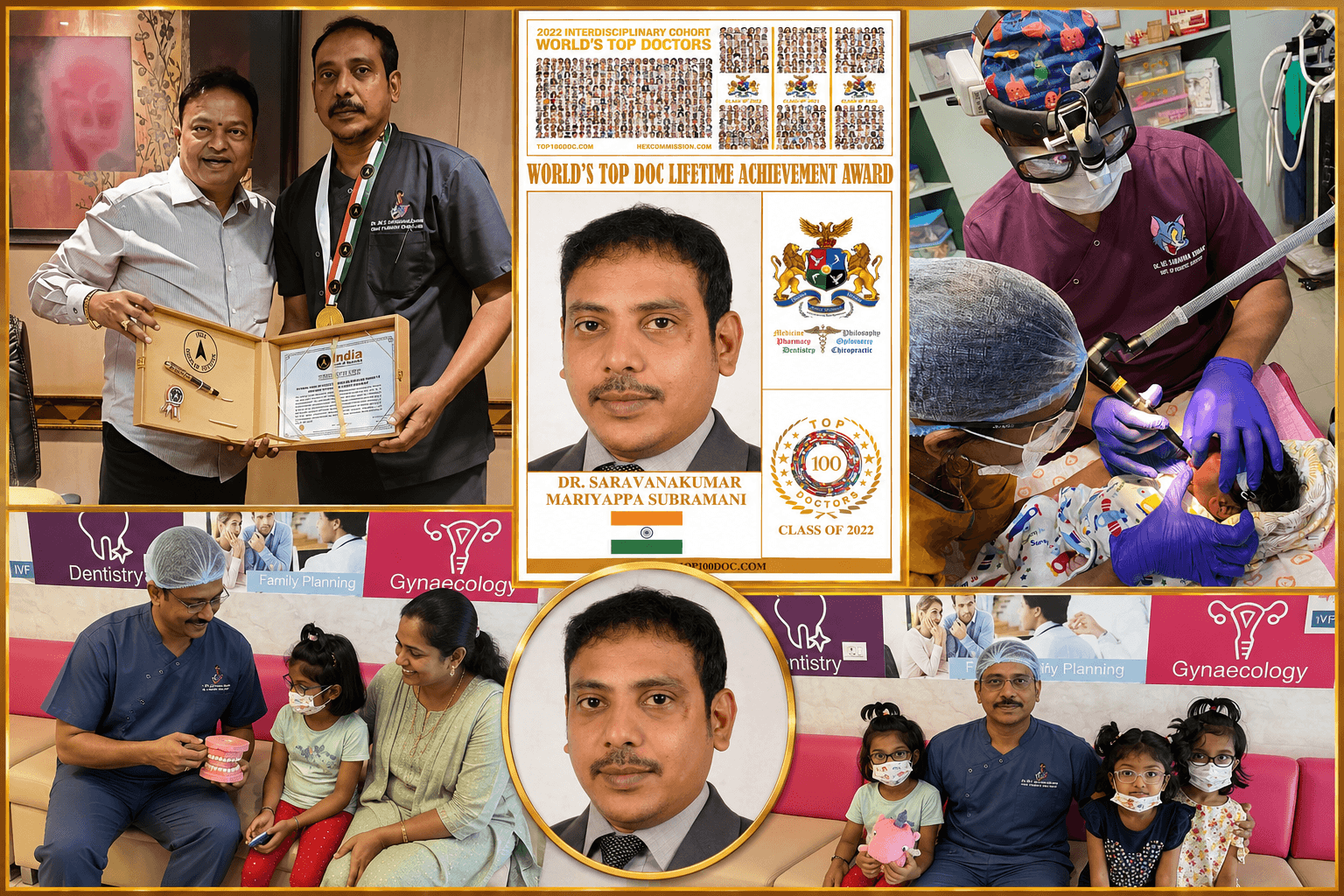
Prepared with inputs from Prof. Dr. M. S. Saravanakumar, MDS (Pediatric Dentistry), Kannmani Dental Home, CIT Nagar, Chennai · Published 20/11/2026

A child who cries at the clinic door, a tooth that clearly needs treatment, and a parent who has heard the word “sedation” and is now more frightened than the child. This is a familiar scene at Kannmani Dental Home in CIT Nagar.

Prof. Dr. M. S. Saravanakumar has used laughing gas for children for the past 10 years and has treated children under general anaesthesia since his postgraduate training.

Below he explains, in his own words where possible, what sedation dentistry for kids involves: what laughing gas is, what your child will feel, who should not have it, and when a child needs mild sedation or general anaesthesia instead.

What is laughing gas, and is it safe for children?

Laughing gas is nitrous oxide mixed with oxygen, breathed in through a small mask over the nose. At the clinic it is called “happy gas” or “happy air”. The American Academy of Pediatric Dentistry (AAPD) states that, used judiciously, it is a safe and effective way to control dental anxiety in children, adolescents and people with special health care needs.

It is a light, or minimal, form of sedation. “The child will stay awake. That’s why it is called conscious sedation,” Prof. Dr. Saravanakumar says. The child can still talk, open the mouth wide when asked and put the tongue out. The protective reflexes (breathing, coughing, spitting) keep working. If a child goes to sleep, that is a deeper level of sedation, which laughing gas is not meant to reach.

He follows the AAPD guideline, which is used worldwide. In India, the Indian Society of Pedodontics and Preventive Dentistry and the South Asian Association of Pediatric Dentistry also give guidance to children’s dentists.

[IMAGE: illustration of a smiling child in a dental chair wearing a small coloured nose mask, a parent beside them. No photo of a real patient. ALT: “Child breathing through a flavoured nose mask in a dental chair, sedation dentistry for kids”]

What we try first with a scared child

Laughing gas is not the first step. The clinic’s approach starts before the child sits in the chair:

  1. A phone consultation first. Children’s dentistry at the clinic begins with a call, so the team knows in advance about tantrums, fears or anything else that matters.
  2. Meeting the child in the reception. The team welcomes the child there, not in the treatment room.
  3. Getting used to the clinic. Distraction with a TV screen, talking or music, plus plenty of positive talk and reassurance, settles many children.
  4. Laughing gas, or mild sedation, only if these are not enough.

He will not force a child into sedation. Holding a child still with a papoose board or Velcro straps (dentists call it protective stabilisation) is, in his words, “the last thing we consider”. He uses it only after every other approach has been tried, and only with the parents’ consent.

How we introduce the “magic nose”

The mask is introduced in the reception, before the child is anywhere near the dental chair. It is coloured and scented, with a strawberry or bubblegum smell, and the child is invited to smell it and practise breathing in and out. He calls it the “magic nose”, or for some children a “parrot nose”. “I feel like telling this will really make them ease and make them comfortable,” he says.

Then he tells the child what to expect: “This is going to make your tummy feel light, and you may also feel like floating, and you might feel like you’re going in a giant wheel or something like that.”

He remembers one child who would not come into the dental chair at all. The team went out to the reception, showed the mask, explained the happy air, and the child became comfortable enough to go ahead. A flavoured mask, he says, makes a real difference.

From what age can a child have laughing gas?

Usually from about three or four years. Laughing gas works only when a child understands what is happening, lets the team place the mask, and breathes through the nose. “Below three years, this understanding is not possible, and we advise not to use below three years,” he says.

It also needs a child who is anxious but willing to cooperate. Laughing gas reduces anxiety and improves cooperation, but it cannot make an uncooperative child cooperate.

Does my child still need the numbing injection?

Yes. Laughing gas calms the child; it does not numb the tooth. “There is no replacement for local anaesthesia,” Prof. Dr. Saravanakumar says. A numbing gel goes on the gum first, then the local anaesthetic is given to the tooth or tissue being treated. A calmer child usually finds this step much easier.

Which treatments is laughing gas used for?

Mostly for short procedures: fillings, extractions, pulpectomy (root canal treatment of a milk tooth) and tongue-tie release in older children. Longer or more extensive treatment may need a different plan, as explained below.

Who should not have laughing gas?

He does not use laughing gas when a child has:

  • a blocked nose or sinusitis, because the child cannot breathe through the nose;
  • an ear infection;
  • a recent surgery;
  • a chest or breathing problem, or any respiratory infection that affects breathing;
  • vitamin B12 deficiency. Nitrous oxide inactivates vitamin B12. A review in the Journal of Dental Anesthesia and Pain Medicine describes this as rare but serious in people who are already deficient. If a child looks anaemic, he may ask for a B12 blood test first.

Before treatment he asks for a fitness check, mainly of breathing. Beyond these conditions, he says, laughing gas can be used for most children. Tell the dentist about any illness or medicine, including asthma.

Before the visit: food and preparation

At Kannmani Dental Home, the instruction is a very light meal about two hours before, then nothing more to eat or drink until the visit. Prof. Dr. Saravanakumar explains that this lowers the chance of nausea and vomiting, and that fasting much longer than needed can itself bring on vomiting.

AAPD guidance agrees that strict fasting is not needed for laughing gas on its own: a light meal is often suggested, and a heavy meal beforehand makes side effects more likely. Fasting rules are stricter for sedation (see below).

At home, keep the description simple and positive. The team will introduce the mask and the “happy air” at the clinic.

During and after: how long does laughing gas take to wear off?

During treatment, the team watches the child’s oxygen level and pulse rate on a monitor. At the end, the child breathes 100% oxygen for three to five minutes.

This clears the gas from the body and prevents a dip in oxygen that dentists call diffusion hypoxia, a step the AAPD guideline also describes.

After that, most children are back to themselves within minutes:

  • Going home and school: the child can go home and can go to school the same day. Keep activities light for the rest of the day, with no hard play.
  • Eating: start with water, then a normal, soft diet that is not spicy or hard. If a tooth was numbed, wait until the numbness wears off before chewing.
  • Side effects: uncommon and short-lived. In Prof. Dr. Saravanakumar’s experience, about 2 to 3% of children feel sick, vomit or get a headache, and vomiting alone happens in 0.5 to 5% of children, mostly when the food instructions were not followed. AAPD guidance puts nausea and vomiting, the most common side effects, at 0.5 to 1.2% of patients.

Can a parent stay in the room?

Yes, a parent can be with the child while laughing gas is used. The clinic uses a scavenging system that removes the gas the child breathes out.

Even so, he does not advise a pregnant mother to stay close by, particularly in the first trimester. If the mother is pregnant, it is better for another parent or family member to accompany the child, and to tell the dentist beforehand.

Laughing gas, mild sedation and general anaesthesia: what is the difference?

 Laughing gasMild (oral) sedationGeneral anaesthesia
Is the child awake?Yes, relaxed and able to talkCalm and may be drowsy, but still responds when spoken toNo, fully asleep
How it is givenThrough a nose maskA sweetened syrup by mouthBy a paediatric anaesthetist
WhereAt the clinicAt the clinicIn a well-equipped paediatric hospital
Typical useAnxious but cooperative children, short proceduresHigh fear, a restless child, longer work or a strong gag reflexMany cavities in a child who cannot cooperate, very young children, some children with special needs

Mild sedation

When laughing gas is not enough, Prof. Dr. Saravanakumar may consider mild sedation, given as a sweetened syrup. How deep the sedation goes depends on the medicine and the dose, not on the syrup form, and the fasting, monitoring and staffing follow the level of sedation intended.

He uses it for four reasons: high fear or anxiety, a restless child who cannot sit still, extensive or complicated procedures, and a strong gag reflex. He uses oral sedation far less often than laughing gas. Sedation by injection into a vein (IV sedation) is done only with an anaesthetist, in a hospital.

Fasting is stricter for sedation. He follows these rules: no liquids for two hours before, breast milk allowed until four hours before, and no solid food for six hours before. The safety set-up includes oxygen, monitoring, emergency medicines and a team trained in basic and paediatric advanced life support, in line with the joint American Academy of Pediatrics and AAPD guideline on sedation for children.

In minimal sedation, a child still responds normally when spoken to and breathing is usually not affected. Deeper sedation can slow or block breathing, which is why sedation needs this monitoring and a trained team, and why deeper levels are given only with an anaesthetist.

General anaesthesia (sleep dentistry)

“Normally we tell it’s a sleep medicine,” he says. Sleep dentistry here means dental treatment under general anaesthesia. (The term is sometimes also used for treating sleep-related breathing problems.) He recommends it when:

  • a child has many cavities and cannot cooperate for treatment in the chair;
  • a child is under three or four years old and other approaches are not possible;
  • a child with special needs, such as autism or cerebral palsy, cannot be treated any other way.

The treatment is done in a well-equipped paediatric hospital, and the anaesthesia is given by a trained, experienced paediatric anaesthetist.

Will sedation harm my child’s brain? Can laughing gas become addictive?

These are the two worries Chennai parents raise most often.

Addiction: nitrous oxide can be misused recreationally, which is where its reputation comes from.

Prof. Dr. Saravanakumar explains that in medical and dental use the dose is measured and controlled, given for a short time by trained hands, and addiction from this use has not been reported.

The brain: the best evidence so far is reassuring for a single short anaesthetic. The GAS trial, published in The Lancet in 2019, followed 722 infants and found that slightly less than an hour of general anaesthesia in early infancy did not change neurodevelopmental outcome at age five.

Questions remain about longer and repeated exposures. In 2017 the US Food and Drug Administration warned that prolonged or repeated anaesthesia in children under three might affect brain development. This is one reason dentists try to finish treatment in as few sessions as possible, and use general anaesthesia only when it is really needed.

Children with autism and other special needs

If a child with autism or other special needs can accept the nose mask, he tries laughing gas. If not, he considers oral or IV sedation, or general anaesthesia when treatment cannot be done safely any other way. The phone consultation before the first visit helps the team plan for the child’s needs.

A pattern he sees often: “My child is not eating”

Many parents come to him because the child is not eating well and is not gaining weight. Some have already tried appetite syrups from several doctors. Often the cause turns out to be the teeth: decayed milk teeth are sensitive and painful, so the child spits food out or swallows without chewing.

He explains it to parents like this: “Do you feel that the grinder or a mixie works if they don’t have a proper cutting efficiency?” Without healthy teeth, a child cannot chew properly.

When a child has many decayed teeth and is too young or too frightened for treatment in the chair, he treats them under laughing gas or general anaesthesia, so the child can chew and eat again.

Our guide to tooth decay in milk teeth explains the treatments involved, and our guide to toothache in children covers the warning signs.

How laughing gas has changed in India

Ten to fifteen years ago, he recalls, children visiting from abroad would ask, “Do you have happy gas?” At that time nitrous oxide was not widely used in Indian dental clinics.

It has since become much more common, and dentists now train in it through proper skill programmes.

Frequently asked questions

Is laughing gas safe for a 3-year-old?

Age matters less than understanding. Laughing gas works when the child accepts the mask and breathes through the nose, which usually happens from about three to four years. Prof. Dr. Saravanakumar advises against it below three.

For a very young child with extensive decay, general anaesthesia in a hospital may be the safer plan.

Will laughing gas put my child to sleep?

No. With laughing gas the child stays awake, relaxed and able to talk and follow instructions. If a child needs to be asleep for treatment, that is general anaesthesia, given by an anaesthetist in a hospital.

Can my child have laughing gas with asthma?

Tell the dentist about asthma before the visit. Prof. Dr. Saravanakumar checks breathing fitness first and does not use laughing gas when a breathing problem or respiratory infection affects the child’s breathing. A child with a cold or blocked nose should have the visit moved.

How much does laughing gas cost?

At Kannmani Dental Home, laughing gas costs ₹1,500 to ₹3,000 per visit, depending on how much is used. This is in addition to the treatment itself.

சிரிப்பு வாயு (லாஃபிங் கேஸ்) குழந்தைகளுக்குப் பாதுகாப்பானதா? (Is laughing gas safe for children?)

பயிற்சி பெற்ற பல் மருத்துவர் சரியான முறையில் கொடுக்கும்போது, பயப்படும் குழந்தைகளை அமைதிப்படுத்த சிரிப்பு வாயு பாதுகாப்பான, பயனுள்ள வழி. குழந்தை விழித்திருக்கும், பேசவும் முடியும். பொதுவாக மூன்று முதல் நான்கு வயதிலிருந்து பயன்படுத்தப்படுகிறது.

In English: when given properly by a trained dentist, laughing gas is a safe and effective way to calm a frightened child. The child stays awake and can talk. It is usually used from about three to four years of age.

Sedation dentistry for kids at Kannmani Dental Home, CIT Nagar, Chennai

Kannmani Dental Home is a dental clinic in CIT Nagar, Chennai, focused mainly on children’s dentistry. It is led by Prof. Dr. M. S. Saravanakumar, MDS (Pediatric Dentistry). He has used laughing gas for about 10 years and has treated children under general anaesthesia since his postgraduate training. He has treated more than 3,500 children, and between 800 and 1,000 with laughing gas.

  • Consultation: ₹500 to ₹1,000
  • Laughing gas: ₹1,500 to ₹3,000 per visit, depending on how much is used
  • Mild sedation and general anaesthesia: explained at the consultation. The cost of general anaesthesia depends on the hospital, the anaesthetist’s and operation theatre charges, the materials used and the number of teeth treated.

Kannmani Dental Home
3/63, 5th Main Road, CIT Nagar, Chennai 600035
Phone: 91763 16667
Open every day, 10 AM to 9 PM
Book an assessment

If your child had a tongue tie released as a baby, or you are expecting, see our guides to tongue tie in babies and dental treatment during pregnancy

This article is for general information and does not replace an examination by a dentist. Whether laughing gas, sedation or general anaesthesia suits your child depends on their health and the treatment needed, and is decided at the consultation.

How this article was prepared: The medical content in this article is based on Prof. Dr. M. S. Saravanakumar’s own clinical experience and the reliable published sources cited below.

Sources

  1. American Academy of Pediatric Dentistry. Use of nitrous oxide for pediatric dental patients. The Reference Manual of Pediatric Dentistry 2026:439-446 (latest revision 2023). aapd.org
  2. Coté CJ, Wilson S; American Academy of Pediatrics, American Academy of Pediatric Dentistry. Guidelines for monitoring and management of pediatric patients before, during, and after sedation for diagnostic and therapeutic procedures. Pediatric Dentistry 2025;47(6):E100-E128. aapd.org
  3. Chi SI. Complications caused by nitrous oxide in dental sedation. Journal of Dental Anesthesia and Pain Medicine 2018;18(2):71-78. ncbi.nlm.nih.gov
  4. McCann ME, de Graaff JC, Dorris L, et al. Neurodevelopmental outcome at 5 years of age after general anaesthesia or awake-regional anaesthesia in infancy (GAS). The Lancet 2019;393(10172):664-677. ncbi.nlm.nih.gov
  5. The Lancet press release. General anesthesia is unlikely to have lasting effects on the developing brains of young children, 2019 (includes the 2017 FDA warning). eurekalert.org
  6. Wirral Community Health and Care NHS Foundation Trust. Information for parents and guardians on inhalation sedation, 2025. wchc.nhs.uk
  7. Great Ormond Street Hospital for Children NHS Foundation Trust. Inhalation sedation for dental procedures. gosh.nhs.uk
  8. Leeds Teaching Hospitals NHS Trust. Inhalation sedation: under 16 years old. leedsth.nhs.uk

https://www.dentalhome.co.in/wp-content/uploads/2026/11/WhatsApp-Image-2026-11-20-at-18.29.15.jpeg 630 1200 Kannmani Dental Care https://www.dentalhome.co.in/wp-content/uploads/2022/08/logo.png Kannmani Dental Care2026-11-20 15:00:262026-11-20 15:16:41Sedation Dentistry for Kids: Is Laughing Gas Safe for My Child?
Pregnant woman seated in a dental chair during a dental consultation

Dental Treatment During Pregnancy: 5 Beliefs Chennai Families Bring Us, and What We Tell Expecting Mothers

November 12, 2026/0 Comments/in Dental Health/by Kannmani Dental Care

Medically reviewed by Prof. Dr. M. S. Saravanakumar, MDS (Pediatric Dentistry), Kannmani Dental Home, CIT Nagar, Chennai · Published 12/11/2026

“Wait until the baby comes, then see the dentist.” Many expecting mothers in Chennai hear this from family, and they come to believe that dental treatment during pregnancy will harm the baby. So a painful tooth is left alone for months, bleeding gums are put down to pregnancy, and an X-ray is refused out of fear for the baby.

Prof. Dr. M. S. Saravanakumar is a paediatric dentist at Kannmani Dental Home, CIT Nagar, and he sees pregnant and breastfeeding mothers as well as children. His reason is simple: a baby’s teeth begin with the mother’s mouth.

Below are the five beliefs he hears most often, what he does for expecting mothers, and what published guidance says about dental treatment during pregnancy.

Is dental treatment safe during pregnancy?

Yes. The American College of Obstetricians and Gynecologists (ACOG) advises that dental care is safe and important during pregnancy, and that needed treatment such as fillings and root canals should not be put off.

Cleaning, dental X-rays and local anaesthesia can all be used. Prof. Dr. Saravanakumar plans each treatment with the mother’s gynaecologist, chooses the timing carefully, and keeps the visit comfortable and calm.

[IMAGE: simple illustration of a pregnant woman sitting upright in a dental chair, with a pillow behind her back. No photo of a real patient. ALT: “Pregnant woman seated upright in a dental chair, dental treatment during pregnancy”]

Which trimester is best for dental treatment?

“As everyone knows, the second trimester is the safest trimester to do a treatment,” Prof. Dr. Saravanakumar says. This is how he plans care through pregnancy:

  • First trimester (months 1 to 3): he usually plans routine procedures for later, and treats an emergency such as severe pain or infection straight away.
  • Second trimester (months 4 to 6): the preferred time for cleaning, fillings and other needed treatment.
  • Third trimester (months 7 to 9): planned work is kept short and comfortable so the mother is not stressed, and treatment that is clinically needed is still given.

An emergency is treated whenever it happens. He has carried out root canal treatment in the first and third trimesters for mothers in severe pain, with the gynaecologist’s advice. His timing is a planning preference, not a sign that care is unsafe early on.

ACOG and the American Dental Association advise that dental care is safe at any stage of pregnancy, and that delaying needed treatment can lead to more complex problems.

Belief 1: “No dental treatment until the baby is born”

This is the belief he meets most, and in his words it is a myth. Treatment can be done in pregnancy with proper guidance and assessment by the gynaecologist.

That last part matters to him. Before any treatment, an X-ray or even a small cleaning, he checks with the mother’s gynaecologist. “We know our limits,” he says.

Leaving a problem alone has its own cost: a small cavity can grow into a painful infection.

Belief 2: “A dental X-ray will harm the baby”

Prof. Dr. Saravanakumar calls this a myth too. The exposure from a dental X-ray is very small, and it is aimed at the teeth, far from the womb. He compares it with the natural radiation people receive on a flight.

RadiologyInfo, a patient site run by two radiology societies, puts a single dental X-ray at about the same as one day of the natural background radiation everyone receives.

He also points out that a lead apron is no longer considered necessary. In 2024, the American Dental Association advised that lead aprons and thyroid collars are no longer needed during dental X-rays, for all patients including pregnant women.

Modern digital equipment and a narrow beam already protect the rest of the body. An X-ray is still taken only when it is needed to decide treatment, and he informs the gynaecologist.

Belief 3: “The numbing injection is not safe in pregnancy”

Many mothers are willing to have a tooth treated but worry about the injection. Prof. Dr. Saravanakumar uses a numbing gel on the gum, a local anaesthetic spray, or a local anaesthetic injection (lignocaine, the anaesthetic most commonly used in dentistry), again with the gynaecologist’s consent.

The national consensus statement on oral health in pregnancy, developed with ACOG and the American Dental Association, advises reassuring pregnant women that local anaesthesia, X-rays and pain medicine used in dental care are safe throughout pregnancy. Any medicine after treatment is chosen with the gynaecologist.

Belief 4: “Bleeding gums are normal in pregnancy”

Bleeding gums are common in pregnancy, but common does not mean they should be ignored. Prof. Dr. Saravanakumar explains that most of it is pregnancy gingivitis: hormone changes make the gums react more strongly to plaque, so they swell and bleed easily when brushing.

According to the US Centers for Disease Control and Prevention, 60 to 75% of pregnant women have gingivitis. ACOG notes that it usually peaks in the third trimester, and is worse in women who already had gum problems before pregnancy.

Bleeding can also come from gum disease, calculus (hardened plaque) or dirt around the teeth that was never cleaned properly. So he examines the gums rather than assuming. Depending on what he finds, he may advise medicine or a professional cleaning (scaling).

How he keeps a pregnant mother comfortable in the chair

He does not recline the dental chair too far. The mother sits in a comfortable, more upright position, and he keeps the visit calm and unhurried. Published dental guidance gives the reason.

Lying flat on the back in later pregnancy can press on a large blood vessel and make a woman dizzy, so a raised head and a slight tilt to the left side are advised.

Belief 5: “Teeth become loose after every delivery”

Some families say a woman loses a tooth for every baby. Prof. Dr. Saravanakumar says it is not so. In his view, teeth that feel loose after delivery may be a sign of a gum (periodontal) problem that needs attention, and the story has spread into a belief.

ACOG explains that the ligaments and bone that hold the teeth can loosen slightly during pregnancy, making teeth a little more mobile for a while. There is normally no tooth loss unless something else is wrong. What does lead to loose teeth and tooth loss is gum disease that is left untreated, which is one more reason to have bleeding gums checked.

Morning sickness: why you should not brush straight after vomiting

Prof. Dr. Saravanakumar advises against brushing straight after vomiting, because it can damage the teeth and gums. Stomach acid softens the surface of the teeth for a while, and brushing at that moment can wear the enamel away.

Instead, rinse your mouth with plain water, as NHS dental services advise, and brush later. ACOG adds that rinsing with a teaspoon of baking soda dissolved in a cup of water can help neutralise the acid.

Your mouth and your baby’s teeth are closely connected

“Mother’s mouth and baby is […] connected,” Prof. Dr. Saravanakumar says, and he explains it in two ways. When germs pass from the mother to the baby, dentists call it vertical transmission. When they pass from the father or other family members, for example through shared toothbrushes or brushes kept touching each other, it is horizontal transmission.

The American Academy of Pediatric Dentistry explains that mothers with high levels of cavity-causing bacteria are more likely to pass them to their children, raising the child’s risk of early tooth decay.

Lowering these bacteria in the mother’s mouth during pregnancy helps delay the baby picking them up. ACOG makes the same point about everyday habits such as sharing spoons.

This is why he talks of the first 1,000 days, from pregnancy to the child’s second birthday, as the foundation for the child’s oral health and overall health. “If the mother has a very clean oral hygiene, no cavities and no other infection in the mouth, the baby has very good benefits of not getting any cavities in future,” he says.

A healthy mouth in the mother lowers the baby’s risk; it does not guarantee a cavity-free child, because the baby’s diet, brushing and fluoride matter too. Expecting mothers who wish can have an oral health counselling session with him. It covers their own teeth and gums, breastfeeding, how to care for the milk teeth when they come, and habits to avoid so the baby’s teeth grow in well.

Planning a baby? See the dentist first

Prof. Dr. Saravanakumar’s first advice is prevention: have a scaling and any fillings done before you plan a pregnancy. A clean, healthy mouth at the start means fewer problems to manage later.

A pattern he sees often: the wisdom tooth left for later

When he finds an impacted wisdom tooth (one stuck in the jaw) that is likely to cause trouble, he advises having it removed before planning a pregnancy. Such a tooth can flare up with severe pain, swelling or infection, and removing it is a more involved procedure that is harder on the mother late in pregnancy, so he prefers to deal with it beforehand. Yet many women still come to him in the third trimester with exactly this problem, after being advised earlier. It is a common story, and an avoidable one.

Does treating gum disease prevent preterm birth?

Some studies have linked gum disease in pregnancy with preterm birth, but research has not shown that treating it prevents preterm birth. A Cochrane review of 15 trials found no clear difference in babies born early when gum disease was treated during pregnancy, though it may slightly reduce low birth weight.

ACOG states that treating gum disease during pregnancy is safe and improves the mother’s oral health. So treat it for your own health and comfort, and do not let fear for the baby stop you.

After the baby arrives

Dental treatment while breastfeeding

Yes, you can. Prof. Dr. Saravanakumar also sees breastfeeding mothers for their own teeth. The US National Library of Medicine’s LactMed database reports that only very small amounts of lignocaine reach breast milk after dental injections. Tell your dentist you are breastfeeding, so any medicine afterwards suits you both.

Your baby’s first dental visit

Bring your baby as early as possible: when the first tooth comes through, and no later than the first birthday. At that visit he guides parents on teething, what to do when milk teeth fall, oral habits such as thumb sucking, mouth breathing and tongue thrusting, and injuries. If a milk tooth falls out with a little bleeding, press a clean, cold cloth on the spot. If a milk tooth is knocked out in a fall, do not push it back into the gum; international dental trauma guidelines advise that milk teeth should not be put back. See a dentist instead.

Our guide to teething in babies  covers the first teeth in detail, and our guide to tooth decay in milk teeth  explains what happens when decay is missed.

Frequently asked questions

Can I get a root canal while pregnant?

Yes, when it is needed. ACOG lists root canals among treatments that should not be delayed in pregnancy. Prof. Dr. Saravanakumar prefers the second trimester for planned work, and treats severe pain in any trimester with the gynaecologist’s advice.

Is teeth cleaning safe in the first trimester?

Yes. Cleaning is safe at any stage of pregnancy. Prof. Dr. Saravanakumar usually plans routine cleaning for the second trimester, as a matter of timing rather than safety. If your gums are bleeding or painful early in pregnancy, see a dentist rather than waiting.

Does tooth pain in pregnancy mean a boy or a girl?

No. Tooth pain or bleeding gums in pregnancy do not tell you the baby’s sex. They come from changes in the mouth, such as gum inflammation, a cavity or an infected tooth, and they should be checked by a dentist.

கர்ப்ப காலத்தில் பல் சிகிச்சை செய்யலாமா? (Can I have dental treatment during pregnancy?)

செய்யலாம். தேவையான பல் சிகிச்சையைக் கர்ப்ப காலத்தில் தள்ளிப்போட வேண்டியதில்லை. திட்டமிட்ட சிகிச்சைக்கு இரண்டாவது மூன்று மாதங்கள் (4 முதல் 6 மாதம்) ஏற்ற காலம். உங்கள் மகப்பேறு மருத்துவரின் ஆலோசனையுடன் பல் மருத்துவர் சிகிச்சையைத் திட்டமிடுவார்.

In English: yes. Needed dental treatment does not have to wait. Months 4 to 6 are the preferred time for planned treatment, and the dentist plans it with your gynaecologist’s advice.

Dental care for expecting mothers at Kannmani Dental Home, CIT Nagar, Chennai

Kannmani Dental Home is a dental clinic in CIT Nagar, Chennai, focused mainly on children’s dentistry, and it also sees pregnant and breastfeeding mothers. It is led by Prof. Dr. M. S. Saravanakumar, MDS (Pediatric Dentistry), who has 19 years of experience in paediatric dentistry.

For expecting mothers, the clinic offers a consultation with scaling and anticipatory guidance for the baby to come, at ₹1,500. A consultation alone is ₹500 to ₹1,000. Please bring details of your pregnancy and your gynaecologist’s contact, so treatment can be planned together.

Kannmani Dental Home
3/63, 5th Main Road, CIT Nagar, Chennai 600035
Phone: 91763 16667
Open every day, 10 AM to 9 PM
Book a consultation

This article is for general information and does not replace an examination by a dentist or advice from your gynaecologist. If you have severe pain, facial swelling or fever during pregnancy, seek care straight away.

How this article was prepared: The medical content in this article is based on Prof. Dr. M. S. Saravanakumar’s own clinical experience and the reliable published sources cited below.

Sources

  1. American College of Obstetricians and Gynecologists. Oral health care during pregnancy and through the lifespan. Committee Opinion No. 569, 2013, reaffirmed 2025. acog.org
  2. Oral Health Care During Pregnancy Expert Workgroup. Oral health care during pregnancy: a national consensus statement (guidance for oral health professionals). National Maternal and Child Oral Health Resource Center, 2012. mchoralhealth.org
  3. American Dental Association. ADA releases updated recommendations to enhance radiography safety in dentistry, 2024. ada.org
  4. ADA News. Using thyroid collars during radiographic exams no longer recommended by ADA, 2024. adanews.ada.org
  5. RadiologyInfo.org (RSNA and ACR). Radiation dose in X-ray and CT exams. radiologyinfo.org
  6. Evearitt A. The reality of dental radiation. Journal of the Colorado Dental Association, 2016. cdaonline.org
  7. ADA News. Pregnancy increases risk of gum disease (CDC figure on gingivitis). adanews.ada.org
  8. Dental care during pregnancy: positioning in later pregnancy. Inside Dental Hygiene. idh.cdeworld.com
  9. Oxford Health NHS Foundation Trust, Oxfordshire Community Dental Service. Oral health in pregnancy. oxfordhealth.nhs.uk
  10. American Academy of Pediatric Dentistry. Guideline on perinatal oral health care. aapd.org
  11. Iheozor-Ejiofor Z, Middleton P, Esposito M, Glenny AM. Treating periodontal disease for preventing adverse birth outcomes in pregnant women. Cochrane Database of Systematic Reviews 2017, Issue 6. cochrane.org
  12. Drugs and Lactation Database (LactMed). Lidocaine. US National Library of Medicine. ncbi.nlm.nih.gov
  13. Day PF, Flores MT, O’Connell AC, et al. International Association of Dental Traumatology guidelines for the management of traumatic dental injuries: 3. Injuries in the primary dentition. Dental Traumatology 2020;36(4):343-359. aapd.org

https://www.dentalhome.co.in/wp-content/uploads/2026/11/WhatsApp-Image-2026-11-12-at-13.32.06-1.jpeg 840 1600 Kannmani Dental Care https://www.dentalhome.co.in/wp-content/uploads/2022/08/logo.png Kannmani Dental Care2026-11-12 14:56:452026-11-12 15:17:10Dental Treatment During Pregnancy: 5 Beliefs Chennai Families Bring Us, and What We Tell Expecting Mothers
Teething in babies – illustration showing the first milk teeth emerging through the lower gums

Teething in Babies and Other First-Teeth Worries: 4 Things Chennai Parents Bring Us, and What We Tell Them

November 7, 2026/1 Comment/in Pediatric Dentistry/by Kannmani Dental Care

Medically reviewed by Prof. Dr. M. S. Saravanakumar, MDS (Pediatric Dentistry), Kannmani Dental Home, CIT Nagar, Chennai · Published 07/11/2026

A teething baby runs a temperature, and everyone blames the tooth. A one-year-old still has no teeth, and the parents are worried. A mother brings her newborn in and asks us to remove “the tooth” that is coming, and it turns out to be a tiny white bump on the gum. A baby is born with a tooth, and the family wonders whether it is a bad sign.

These are four worries families bring to Prof. Dr. M. S. Saravanakumar, paediatric dentist at Kannmani Dental Home, CIT Nagar. Below is what he checks in each case, what he tells parents, and what published research says. Teething in babies comes first, because it is the one every family meets and the one parents most often manage at home.

Teething in babies: the short answer

Teething is the normal process of milk teeth coming through the gums. Some babies pass this stage without any trouble. Others drool, rub their gums and become fussy for a few days around each tooth.

Teething can make a baby slightly warm, but it does not cause a real fever of 38°C or more, and a baby with fever, loose motions that continue, or vomiting should see the paediatrician.

Worry 1: “Teething gave my baby fever and loose motion”

Prof. Dr. Saravanakumar’s view is that teething in babies is a normal stage, and babies go through it differently. Some have no trouble at all. In his experience, some may have looser stools, spit up more, or feel a little warm while a tooth comes through.

A large review of studies found the most common signs to be sore, irritated gums, fussiness and drooling. Teething was linked with a small rise in body temperature, but not one high enough to count as a fever. Diarrhoea and vomiting were not strongly linked with teething.

When it is not just teething

See your baby’s doctor if your baby has:

  • a temperature of 38°C or more
  • loose motions that keep going, or any vomiting
  • a baby who seems very upset, sleepy or clearly unwell
  • any temperature of 38°C or more in a baby under 3 months old: this needs prompt medical assessment, so do not wait

Babies start teething at the same age they start catching common infections, so the two often arrive together. It is safer to check for illness than to assume it is the tooth.

The bluish bubble over a coming tooth

Sometimes a soft, bluish or purple swelling forms on the gum just over a tooth that is about to come through. This is an eruption cyst. Most settle on their own once the tooth breaks through.

Prof. Dr. Saravanakumar asks parents to bring the baby in if they see one. When a cyst is large or bothering the baby, he may open it with a laser so the tooth can come through.

What helps a teething baby, and what to avoid

At the first dental visit, Prof. Dr. Saravanakumar prepares parents for teething before it starts, so they know it may come and need not worry. For discomfort, he says a paracetamol syrup suitable for the baby’s age is usually enough.

Give it exactly as the label or your baby’s doctor directs. If your baby is under 3 months old, ask your baby’s doctor before giving any medicine, including paracetamol.

Other simple, safe ways to soothe sore gums:

  • let the baby chew on a firm rubber teething ring that has been chilled in the fridge, not frozen hard
  • gently rub the gums with a clean finger
  • give plenty of cuddles and attention

Things to avoid:

  • Honey on the gums, the teether or a dummy. Honey should not be given to babies under one year, because of the risk of infant botulism, a rare but serious illness.
  • Numbing gels containing benzocaine. The American Academy of Pediatrics does not recommend them for infants.
  • Adult mouth-ulcer gels. Some contain salicylate, a chemical related to aspirin, and are not for children under 16.
  • Aspirin, in any form, for a baby or child.
  • Teething necklaces or bead bracelets. They do not relieve pain, and babies have choked on the beads or been strangled by the string.

Before using any teething syrup or gel, read what it contains and ask your baby’s doctor if you are unsure.

Worry 2: “My baby is one year old and still has no teeth”

This is a question many parents bring him, and it is one where his advice has changed with what he sees. Textbooks have long said the first tooth comes at 6 to 8 months. In his practice today, many babies get their first tooth at 12, 13 or 14 months, and they are healthy. Even parents who are doctors ask him about it.

Research agrees that the timing varies widely. The lower front teeth usually come first, often between 6 and 10 months, but a delay of up to a year may mean little in an otherwise healthy child. Babies born early may also get their teeth later.

His approach is to reassure parents that the tooth will come. If it is slow, he may take an X-ray to show them that the teeth are there under the gum, waiting. He also sees babies whose upper front tooth comes before the lower one. That is a normal variation too.

A first tooth that still has not appeared by around 18 months is generally treated as worth looking into, to rule out a medical cause. If your baby has passed their first birthday with no teeth, a dental check gives you an answer either way.

Worry 3: “A white tooth is coming. Can you remove it?”

Many parents come in having seen something small and white on their newborn’s gum or the roof of the mouth. They believe a tooth is coming, and some ask him to remove it. In most of these babies there is no tooth at all.

These little white or yellowish bumps are newborn cysts, tiny pockets of trapped tissue left over from the way the mouth formed before birth. They have different names depending on where they sit:

  • Epstein pearls appear along the middle of the roof of the mouth. They are very common in newborns.
  • Bohn’s nodules appear on the gums, and are the ones most often mistaken for teeth.

Both are harmless and usually clear up on their own within the first few months, without any treatment. That is what Prof. Dr. Saravanakumar tells parents: the bumps will go by themselves as the baby grows. He asks them to come back if a bump keeps growing, or if it makes feeding or breathing difficult.

Worry 4: “My baby was born with a tooth. Is it a bad sign?”

Some families feel that a baby born with a tooth brings bad fortune, or that it is a sign of something evil. Prof. Dr. Saravanakumar’s answer is direct: it is not connected with anything like that. “This is not a bad sign. This is not an evil,” he tells parents. It is a known dental condition, and it is rare: published reviews put it at about one in every 2,000 to 3,500 births.

Why does it happen?

He explains it simply. The tooth bud, the tiny tooth forming inside the jaw, is sitting higher than usual, so the tooth comes through early. Around 9 in 10 of these teeth are the baby’s own milk teeth that would normally have come at 6 to 8 months, arriving months ahead of time. A small number are extra teeth.

Dentists name these teeth by when they appear:

  • Natal teeth are present at birth.
  • Neonatal teeth come through in the first month.
  • Early infancy teeth come through between one and about three months.

Natal teeth are about three times as common as neonatal teeth. They usually appear in the lower front of the mouth, and they are often small and loose, because the root has not formed fully yet.

When does he leave the tooth, and when does he remove it?

Many of these teeth can be left alone. Prof. Dr. Saravanakumar removes one when it causes a problem:

  • it is very loose and shaking, and there is a worry it could come out and be swallowed or breathed in
  • it makes breastfeeding difficult for the baby
  • it injures the mother’s nipple during feeds
  • it rubs and injures the underside of the baby’s tongue, causing an ulcer known as Riga-Fede disease

Before removing a tooth from a newborn, he checks whether the baby has had the vitamin K injection given at birth. A newborn’s blood does not clot well in the first days, and vitamin K protects against bleeding. Published case reports advise either waiting until the baby is about 10 days old or giving vitamin K first, after the paediatrician is consulted. The tooth is then removed gently under local anaesthesia. He stresses that this is a procedure for a paediatric dentist, done with great care.

A pattern worth knowing: there can be more than one

In one baby he saw, a sharp tooth present at birth was cutting the baby’s tongue and making feeding difficult, so it was removed. Some weeks later the mother came back, sure that the tooth had come back. It had not. A second tooth had come through. Teeth can arrive one after another in the first one to three months, so a family who has seen one early tooth should keep watching, and come back if another appears.

When should your baby first see a dentist?

As soon as the first tooth comes through, and no later than the first birthday. This is the recommendation of the American Academy of Pediatric Dentistry, and it is what Prof. Dr. Saravanakumar advises. The first visit is short. It is a chance to check the mouth, prepare parents for teething, and start cleaning the new teeth properly, before decay has a chance to begin.

This early start is the heart of his approach. He believes a child’s first 1,000 days are the foundation for 100 years of health and wealth. Our guide to tooth decay in milk teeth explains what happens when decay is missed. If your newborn also struggles to latch, our guides to tongue tie in babies and lip tie in babies  cover what to look for.

Frequently asked questions

How many days does teething fever last?

A baby may feel slightly warm for a few days around the time a tooth breaks through, and this settles once the tooth is through. A temperature that reaches 38°C or stays raised is not teething; see the warning signs under Worry 1.

Do natal teeth fall out on their own?

Some are firm and stay, and many of these are the baby’s normal milk teeth. Others are very loose because their root has not formed. The worry with a very loose tooth is that it could come out during a feed and be swallowed or breathed in, which is why a dentist may advise removing it. Have any tooth present at birth checked by a paediatric dentist.

Are natal teeth linked to any syndrome?

A few rare syndromes are associated with natal teeth, but most babies born with a tooth are otherwise healthy. Your paediatrician and dentist will look at your baby as a whole and tell you whether any further check is needed.

Is a baby born with teeth lucky or unlucky?

Neither. It is a known dental condition in which the tooth forms higher in the jaw and comes through early. What matters is whether the tooth is loose, whether it hurts the baby’s tongue, and whether feeding is comfortable for mother and baby.

குழந்தைக்கு பல் முளைக்கும்போது காய்ச்சல் வருமா? (Does teething cause fever?)

பல் முளைக்கும்போது குழந்தை எரிச்சலாக இருக்கலாம், எச்சில் அதிகமாக வழியலாம், உடல் சற்று சூடாக இருக்கலாம். ஆனால் 38°C அல்லது அதற்கு மேல் காய்ச்சல், தொடர்ந்த வயிற்றுப்போக்கு அல்லது வாந்தி இருந்தால் அது பல்லால் ஏற்பட்டது அல்ல. குழந்தை மருத்துவரை அணுகுங்கள்.

In English: a teething baby may be fussy, drool more and feel slightly warm, but a fever of 38°C or more, continuing loose motions or vomiting are not caused by teething, so see the paediatrician.

Babies’ dental care at Kannmani Dental Home, CIT Nagar, Chennai

Kannmani Dental Home is a dental clinic in CIT Nagar, Chennai, focused mainly on children’s dentistry and led by Prof. Dr. M. S. Saravanakumar, MDS (Pediatric Dentistry), who has 19 years of experience in paediatric dentistry.

If your baby was born with a tooth, has bumps on the gums you are unsure about, or has passed the first birthday without a tooth, book a consultation to have it checked. The consultation fee is ₹500 to ₹1,000.

Kannmani Dental Home
3/63, 5th Main Road, CIT Nagar, Chennai 600035
Phone: 91763 16667
Open every day, 10 AM to 9 PM
Book a consultation

How this article was prepared: The medical content in this article is based on Prof. Dr. M. S. Saravanakumar’s own clinical experience and the reliable published sources cited below.

Sources

  1. Mhaske S, Yuwanati MB, Mhaske A, et al. Natal and neonatal teeth: an overview of the literature. ISRN Pediatrics 2013;2013:956269. PMC3759256
  2. Chieowwit N. Natal and neonatal teeth: dental management (review). Siriraj Medical Journal 2026;78(1). tci-thaijo.org
  3. Natal and neonatal teeth: a case series (vitamin K and timing of extraction). PMC6040504
  4. Kanumuri PK. Riga Fede disease. Journal of Neonatal Surgery 2017;6(1):20. PMC5224754
  5. Jain A, et al. Gum lesions in a newborn infant (Bohn’s nodules). Oman Medical Journal 2025;40(4):e787. org
  6. Atlas of lumps and bumps: Bohn nodules and Epstein pearls. Consultant360. com
  7. Delay in eruption of baby (primary) teeth. GPnotebook. com
  8. Delay in eruption of baby (primary) teeth. Primary Care Notebook. com
  9. When should you worry about a child’s baby teeth not erupting? Vinmec. com
  10. Massignan C, Cardoso M, Porporatti AL, et al. Signs and symptoms of primary tooth eruption: a meta-analysis. Pediatrics 2016;137(3):e20153501. Summary: com
  11. “It’s just teething…” Archives of Disease in Childhood 2016. org/10.1136/archdischild-2016-310972
  12. Apollo Pharmacy. Teething for infants: signs and safe remedies (fever under 3 months). in
  13. Signs of teething (citing NICE 2020). nct.org.uk
  14. info. Teething. patient.info
  15. Dental eruption cyst. Consultant360. com
  16. NHS North West London, Healthier Together. Teething (babies): pain relief from three months. westlondon.nhs.uk
  17. Teething tips (aspirin not for children under 16). nhs.uk
  18. American Academy of Pediatrics. Teething necklaces and beads: a caution for parents. org
  19. Oral salicylate gels: not for use in those younger than age 16 years. gov.uk
  20. Honey should not be fed to infants under one year of age. anses.fr
  21. American Academy of Pediatric Dentistry recommendation on the first dental visit. Decisions in Dentistry. com
https://www.dentalhome.co.in/wp-content/uploads/2026/11/WhatsApp-Image-2026-11-06-at-15.55.23.jpeg 836 1600 Kannmani Dental Care https://www.dentalhome.co.in/wp-content/uploads/2022/08/logo.png Kannmani Dental Care2026-11-07 06:58:092026-11-07 07:37:45Teething in Babies and Other First-Teeth Worries: 4 Things Chennai Parents Bring Us, and What We Tell Them
Toothache in children and 7 harmful home remedies parents should avoid

Toothache in Children: 7 Home Remedies and Myths That Harm

October 28, 2026/1 Comment/in Pediatric Dentistry/by Kannmani Dental Care

Prepared with inputs from Prof. Dr. M. S. Saravanakumar, MDS (Pediatric Dentistry), Kannmani Dental Home, CIT Nagar, Chennai · Published 29 October 2026

It is late at night and your child cannot stop crying about a tooth. Someone at home suggests a pinch of karpooram (camphor) on the tooth, Vicks on the cheek, or a hot cloth on the swelling.

These remedies are passed down with love, and many Chennai families have heard at least one of them. Some of them can hurt your child.

This guide explains toothache in children: which home remedies cause harm, what is safe to do at night, and when tooth pain needs urgent care. It draws on the clinical advice of Prof. Dr. M. S. Saravanakumar, paediatric dentist at Kannmani Dental Home, CIT Nagar, and on published research.

What should you do first when your child has a toothache?

Keep your child calm and comfortable, and look for swelling on the face or gum and for fever. For pain, give a medicine suitable for your child’s age and weight, exactly as the label or your child’s doctor says. Do not put any medicine, balm or home remedy on the tooth, gum or cheek. Then take your child to a dentist, usually the next day, because tooth pain in a child almost always means decay or infection that needs treatment.

If the face is swelling towards the eye or neck, or your child has trouble swallowing or breathing, do not wait for morning. The warning signs are listed further down.

Why do so many families still try home remedies first?

Because the advice feels familiar and the dentist feels like a last resort. A survey of parents at a Chennai dental college hospital found that for 78.3%, the reason for taking their child to a dentist was toothache or an injury.

One in five (20.8%) said milk teeth did not need treatment. Surveys elsewhere in India show the same pattern. In one, about 59% of people said they would put a pain balm or Vicks on a painful tooth.

Below are the seven beliefs Prof. Dr. Saravanakumar addresses most often with parents, and what to do instead.

7 toothache home remedies and myths that can harm your child

1. “Milk teeth will fall anyway, so the pain can wait”

Milk teeth are temporary, but they do real work for years. Prof. Dr. Saravanakumar describes them as the foundation for chewing and swallowing, so that a child gets proper nutrition.

A tooth that is painful, decayed or broken makes chewing hard. In his experience, a child who cannot chew well may eat poorly, and this may affect general health, sleep and attention at school.

Research from Chennai supports the everyday part of this. One study looked at 238 children aged six months to six years at a Chennai dental hospital. Parents of children with tooth decay most often reported pain and difficulty eating and drinking, and many reported disturbed sleep.

These problems were more common when the decay had reached the nerve or caused an abscess.

His advice is simple: a painful milk tooth needs the same attention you would give an adult tooth. Our guide to milk teeth decay treatment explains how decayed milk teeth are saved.

2. Camphor (karpooram) or a clove and camphor paste on the tooth

An older home remedy mixes camphor with clove oil, coconut oil and paraffin into a paste that is pressed onto the painful tooth. A clove and camphor remedy from Madurai is recorded in a national database of traditional knowledge. Camphor gives a cooling, numbing feeling, which is why it seems to work for a while.

Prof. Dr. Saravanakumar advises against it. Camphor is a very strong substance that can burn the soft tissues of the mouth. The larger danger is swallowing.

Doctors in India have reported young children having seizures after swallowing small amounts of camphor, including a two-year-old who ate about half a tablet. A child with a sore tooth will often lick or swallow whatever is placed in the mouth.

Keep camphor tablets well out of children’s reach, and never put camphor in a child’s mouth.

3. Vicks or a pain balm on the tooth, gum or cheek

Parents rub Vicks or a pain balm on the cheek or gum because the cooling feeling seems to calm the pain. Prof. Dr. Saravanakumar’s view is clear: these products are harmful inside the mouth. As he puts it, “Vicks is for the chest, not for the tooth.”

Vicks VapoRub made in India contains about 5% camphor, along with menthol, eucalyptus oil, turpentine oil and thymol in a petroleum jelly base. Its label says it is for external use only and must be kept out of reach of children.

Vicks does not contain methyl salicylate, but some other pain balms do. This aspirin-like chemical has caused serious poisoning in toddlers even in small amounts.

On the cheek, a balm only cools the skin. It does nothing for the decay inside the tooth, and a child can easily get it on their fingers and into the mouth.

4. A painkiller tablet kept directly on the tooth

Some parents crush a tablet and press it against the aching tooth, hoping it will work faster. It does not. Prof. Dr. Saravanakumar explains that painkillers work only when swallowed.

Some tablets, such as aspirin, are acidic and can cause a chemical burn on the gum, which leaves a painful ulcer on top of the toothache.

There is a second reason to avoid aspirin. It should not be given to children under 16 at all, because in rare cases it can cause Reye’s syndrome, a serious illness. Use only a children’s pain-relief medicine, given by mouth as the label or your doctor directs.

5. Hot fomentation on a swollen cheek

A hot water bag or warm cloth on a swollen face is a common reflex. In one Indian survey, more than 40% of people believed balm or hot fomentation reduces dental swelling.

Prof. Dr. Saravanakumar calls heat the worst remedy for a swelling. In his clinical experience, heat widens the blood vessels and may help an infection spread faster into the face and neck.

If your dentist or doctor advises it, a cold compress (ice wrapped in a clean cloth, held on the outside of the cheek) is the better choice. A swollen face from a tooth means infection, so it needs a dentist the same day.

6. “The pain has stopped, so the tooth is fine”

Mild pain with sweets or cold drinks is an early warning that a tooth needs attention. When severe pain suddenly stops without treatment, Prof.

Dr. Saravanakumar explains that it often means the problem has become worse and the nerve inside the tooth has died. The infection is still there and can flare up later as a swelling or abscess.

A tooth like this needs an X-ray. In a milk tooth, the usual treatment is nerve treatment (pulpectomy) or, if the tooth cannot be saved, removal.

7. “Removing an upper tooth affects the eyes”

Many people believe that taking out an upper tooth damages eyesight. Surveys in Chennai and elsewhere in India have recorded this belief. It is a myth.

Prof. Dr. Saravanakumar explains that the teeth and the eyes have different blood and nerve supplies. A severe upper tooth infection can cause swelling around the eye, and removing the infected tooth removes the source of that infection without harming vision.

Very rarely, a dental numbing injection can cause temporary blurred or double vision. In most reported cases this cleared up on its own, and it may be part of where the myth began.

Is clove oil safe for a child’s toothache?

Clove oil is the remedy parents search for most. It contains eugenol, which has a mild numbing effect. In clinical studies, including one in Indian children, clove-based gels numbed the gum about as well as a standard numbing gel before a dental injection. It is also strong.

It can irritate the gums, and it is not safe for a young child to swallow. Clove oil may ease pain for a short time, but it never treats the decay. Do not use it on your child without asking your dentist first, and never mix it with camphor.

What can I give my child for tooth pain at night?

Many parents reach for home remedies at night, when tooth pain can feel worse lying down. This is the routine Prof. Dr. Saravanakumar gives parents who call about night-time tooth pain:

  1. Raise your child’s head slightly while lying down, for example with an extra pillow.
  2. Give a pain-relief medicine suitable for your child’s age and weight, as per the label or your child’s doctor. Never give aspirin.
  3. Do not use hot fomentation, Vicks or pain balms, and do not put tablets, camphor or anything else on the tooth.
  4. Bring your child to the dentist the next day, so an X-ray can be taken and the cause treated.

If any of the warning signs below appear, seek care that night.

When does a child’s toothache need urgent care?

Go to a hospital emergency department straight away if your child has:

  • swelling spreading towards the eye, or a swollen or painful eye
  • swelling down the neck, or a lot of swelling inside the mouth
  • difficulty breathing, swallowing or speaking
  • difficulty opening the mouth

A fever, or swelling of the face or jaw, needs a dentist the same day. These signs point to a dental abscess, an infection that will not clear up with home care.

How is toothache in children treated at the clinic?

The dentist first examines the tooth and, where needed, takes an X-ray to see how deep the decay goes. Treatment depends on what is found, and your dentist will explain which option suits your child:

  • Small decay: the decay is removed and the tooth is filled.
  • Infection limited to the crown of the tooth, with healthy roots: Prof. Dr. Saravanakumar does a pulpotomy, which removes only the infected upper part of the nerve.
  • Deeper infection in a tooth that can be restored and will stay in the mouth long enough: a pulpectomy, which cleans the nerve from the whole tooth. A crown usually follows: stainless steel or zirconia for back teeth, and aesthetic, strip or zirconia crowns for front teeth.
  • A tooth that cannot be saved: it is removed. If the adult tooth is still years away, a space maintainer keeps the gap open. If the adult tooth will come through within about six months, one is not needed.

Children who are nervous are given time to get used to the clinic first. Many relax with a TV screen, music, conversation and reassurance. If that is not enough, Prof. Dr. Saravanakumar may consider laughing gas (nitrous oxide) or mild sedation, for example for a very anxious child or a longer procedure.

Frequently asked questions

Can a child’s toothache go away on its own?

The pain can stop, but the cause does not heal by itself. Decay keeps spreading, and a sudden end to severe pain often means the nerve has died while the infection remains.

That infection can later return as swelling or an abscess. Any toothache in a child, even one that has settled, should be checked by a dentist, who may take an X-ray.

Is it necessary to treat a cavity in a milk tooth?

Yes. A decayed milk tooth can cause pain, infection and abscess, and it can make eating and sleeping difficult.

Milk teeth also hold space for the adult teeth. If one is lost too early, a space maintainer may be needed. Treating a small cavity early is simpler for your child than treating an infected tooth later.

How can I treat a tooth cavity in my 5-year-old?

A cavity cannot be treated at home. A dentist removes the decay and restores the tooth. A small cavity needs a filling. A deep cavity that has reached the nerve may need a pulpotomy or pulpectomy, often followed by a crown.

Until the appointment, give an age-appropriate pain medicine by mouth and avoid putting anything on the tooth.

Can a toothache cause fever in a child?

Yes, when the tooth is infected. A fever with toothache, especially with swelling of the face or gum, suggests a dental abscess.

Your child needs a dentist the same day. Go to a hospital emergency department straight away if the swelling spreads towards the eye or neck, or your child has trouble swallowing or breathing.

பல் வலிக்கு என்ன செய்வது? (What should I do for my child’s toothache?)

குழந்தையின் தலையை சற்று உயர்த்தி படுக்க வைக்கவும். வயது மற்றும் எடைக்கு ஏற்ற வலி நிவாரண மருந்தை லேபிள் அல்லது மருத்துவர் அறிவுரைப்படி கொடுக்கவும். கற்பூரம், பாம், சூடான ஒத்தடம் எதுவும் வேண்டாம். மறுநாள் பல் மருத்துவரிடம் அழைத்து வாருங்கள்.

In English: raise your child’s head slightly, give an age-appropriate pain medicine as the label or doctor directs, avoid camphor, Vicks, balms and heat, and see a dentist the next day.

Children’s dental care at Kannmani Dental Home, CIT Nagar, Chennai

Kannmani Dental Home is a dental clinic in CIT Nagar, Chennai, focused mainly on children’s dentistry and led by Prof. Dr. M. S. Saravanakumar, MDS (Pediatric Dentistry), who has 19 years of experience in paediatric dentistry. His approach starts early, with the belief that a child’s first 1,000 days are the foundation for 100 years of health and wealth.

If your child has tooth pain, swelling or a tooth that has been hurting on and off, book a consultation to find the cause and discuss treatment. The consultation fee is ₹500 to ₹1,000.

Kannmani Dental Home
3/63, 5th Main Road, CIT Nagar, Chennai 600035
Phone: 91763 16667
Open every day, 10 AM to 9 PM
Book a consultation

This article is for general information and does not replace an examination by a dentist or doctor. If your child is unwell or the swelling is spreading, seek medical care straight away.

How this article was prepared: The medical content in this article is based on Prof. Dr. M. S. Saravanakumar’s own clinical experience and the reliable published sources cited below.

Sources

  1. Mounissamy A, Moses J, Ganesh J, Arulpari M. Evaluation of parental attitude and practice on the primary teeth of their children in Chennai: a hospital survey. Int J Pedod Rehabil 2016. core.ac.uk/works/59034310
  2. Sharna N, Ramakrishnan M, Samuel V, et al. Association between early childhood caries and quality of life. Dentistry Journal 2019;7(4):95. PMC6960758
  3. Taboos among general population about dental extraction in Sangli region: a prospective study. Bioinformation 2025. PMC12357656
  4. Illusions of a common man in dental perspective: a time for eradication. IMSEAR, WHO SEARO
  5. National Innovation Foundation. Herbal treatment for toothache (clove and camphor), Madurai, Tamil Nadu. innovation.nif.org.in
  6. Mathen PG, Sreekrishnan TP, Kumar KP, Mohan N. Camphor poisoning: a rare cause of acute symptomatic seizures in children. J Emerg Trauma Shock 2018;11(3):228–229. PMC6182968
  7. Kale SS. Camphor poisoning: personal experience. Indian Pediatrics 2013. indianpediatrics.net
  8. Camphor poisoning (correspondence). Indian Pediatrics 2012;49:841–842. IMSEAR PDF
  9. Davis JE. Are one or two dangerous? Methyl salicylate exposure in toddlers. J Emerg Med 2007;32(1):63–69. PMID 17239735
  10. Soreness in the floor of the mouth (aspirin burn). Dental Update, Clinical Challenges. dental-update.co.uk
  11. NHS. Who can and cannot take aspirin for pain relief. nhs.uk
  12. NHS. Dental abscess. nhs.uk
  13. Dental local anaesthesia and ophthalmic side effects. National Elf Service (Dental Elf). nationalelfservice.net
  14. Colgate. Natural toothache pain relief for your child (clove oil for older children only). colgate.com
  15. Colgate. Natural toothache pain relief for your child (diluting clove oil). colgate.com
  16. Prabakar J, et al. Assessment of taboos in dentistry and oral health behaviours among adult people of Chennai. Saveetha Dental College, 2021. hilarispublisher.com
  17. Vicks VapoRub Vaporizing Ointment, made in India: ingredients and label warnings. watsons.com.sg
  18. Alqareer A, Alyahya A, Andersson L. The effect of clove and benzocaine versus placebo as topical anesthetics. J Dent 2006;34(10):747–750. PMID 16530911
  19. Anantharaj A, et al. Pain perception after benzocaine gel, clove-papaya gel and precooling before intraoral injections in children. J Indian Soc Pedod Prev Dent 2020;38(2):184–189. DOAJ

https://www.dentalhome.co.in/wp-content/uploads/2026/10/WhatsApp-Image-2026-10-28-at-19.46.13.jpeg 840 1600 Kannmani Dental Care https://www.dentalhome.co.in/wp-content/uploads/2022/08/logo.png Kannmani Dental Care2026-10-28 15:26:312026-10-28 15:46:12Toothache in Children: 7 Home Remedies and Myths That Harm
Lip tie in babies vs normal upper lip frenulum diagram

Lip Tie in Babies: Signs, When It Matters and Treatment in Chennai

October 23, 2026/1 Comment/in Pediatric Dentistry/by Kannmani Dental Care

Medically reviewed by Prof. Dr. M. S. Saravanakumar, MDS (Pediatric Dentistry), Kannmani Dental Home, Chennai.

You lifted your baby’s upper lip and saw a band of tissue running down to the gum. Someone in a parents’ group called it a lip tie. Now you are wondering whether it explains the painful feeds, and whether it needs to be cut.

Here is the short answer. Every baby has a piece of tissue joining the upper lip to the gum, and in most newborns it sits low and looks prominent. That alone is not a problem.

A lip tie matters only when it truly stops the upper lip from moving well enough to feed, and that is uncommon. This guide explains how to tell the difference, when release is worth considering, and what treatment involves at Kannmani Dental Home in Chennai.

What is a lip tie?

The tissue under the upper lip is the upper labial frenulum, a small fold that steadies the lip. A lip tie (or upper lip tie) is the name used when that frenulum is short, tight or thick enough to stop the upper lip from lifting and rolling outward.

The term is newer and less precise than tongue tie. Specialists still disagree on where a normal frenulum ends and a lip tie begins. Even the grading system most often quoted online, the Kotlow classification, gives different grades when different experts look at the same baby.

Lip tie vs normal: what does a normal upper lip look like?

Most parents are surprised by how low the frenulum sits in a newborn. In a study that photographed newborns’ upper lips, every baby had a labial frenulum, and in 83% it was attached right at the edge of the gum. A low attachment is common, not a defect.

As the jaw grows and the teeth come in, the attachment usually moves higher and looks less prominent.

So the question is movement, not appearance. When the lip is lifted gently, does it turn up and outward? During a feed, does the upper lip rest softly rolled out on the breast, or does it stay tucked in and tense?

If you cannot tell by looking, that is normal. Dr. Saravanakumar can assess how your baby’s lip and tongue move during a feed, so you know whether there is anything to treat. Book a consultation

Image placeholder: labelled diagram (not a real baby’s photo) showing a normal low frenulum and a frenulum that restricts lip movement, side by side. ALT text: “lip tie in babies vs normal upper lip frenulum diagram”.

Signs that a lip tie may be affecting feeding

When a tight upper lip does interfere, the signs usually show up during breastfeeding:

  • the upper lip curls inward and stays tucked during the feed
  • a shallow latch, with the baby slipping off the breast
  • clicking sounds, or milk leaking from the corners of the mouth
  • long, frequent feeds and slow weight gain
  • for the mother, nipple pain, creased or cracked nipples, or a line pressed into the nipple by the lip

Each of these has many possible causes. Positioning, a tongue tie, a sleepy or premature baby, and the mother’s milk supply can all produce the same picture. One study graded the upper lip frenulum of 100 healthy newborns and found no link between the grade and breastfeeding comfort, pain or latch. If feeding hurts, the lip is one thing to check, never the only one.

Does every lip tie need to be released?

No. Most do not.

The American Academy of Pediatrics, in its 2024 clinical report, describes lip and cheek frenula as normal structures that do not need surgery to improve breastfeeding.

An expert panel of the American Academy of Otolaryngology (2020) agreed that an upper lip frenulum is normal in infants and that its link with feeding difficulty is unclear. A systematic review found no randomised trials on lip tie release and rated the evidence for routine release as poor.

That is why the first step at Kannmani Dental Home is a functional assessment, not a glance at the frenulum. Dr. Saravanakumar looks at the anatomy together with the symptoms of both mother and baby, and works alongside lactation professionals.

Often, better positioning and gently turning the upper lip outward at latch are enough, with no procedure at all.

He puts the distinction simply:

The labial frenum is there for everyone. Only when it is restricted do we call it a lip tie. We don’t look only at the structure. We see the function, talk to the parents, and then decide.

When Dr. Saravanakumar advises release

In a baby, he considers release when the frenulum is very thick and short and the upper lip cannot flange, or roll outward, during breastfeeding. In his experience, a lip that cannot seal at the breast lets the baby swallow air.

Parents then notice gas, a bloated tummy, frequent spitting up and a baby who does not settle easily after feeds. These symptoms are common in young babies for many other reasons too, and research has not confirmed that the lip is the cause, so they are weighed alongside the full feeding assessment.

In an older child, he looks at the teeth. A very thick, short frenulum that does not stretch can sit between the front teeth as they come in.

He checks whether the front milk teeth are erupting normally, whether they are rotated, and how wide the gap between them is. A small gap is normal; a large one may point to a gap in the permanent teeth later (see the section on gaps below).

Every one of these decisions follows his rule for all treatment, which he calls the “My Baby Principle”:

I release only when I am sure the tie is restricting the baby and that release will help. When I am doubtful, I give exercises only and watch for improvement.

Lip tie and tongue tie: why the tongue is checked first

Parents often hear about the lip and the tongue together. They are separate structures, and one does not predict the other. In the same study of 100 newborns, a tight lip and a tight tongue did not tend to occur together.

For feeding, the tongue does most of the work. It cups the nipple, creates suction and moves the milk back. The upper lip mainly helps to seal. So when a baby struggles to feed, a restrictive tongue tie is the more likely reason. The evidence for releasing a tongue tie that affects feeding is also stronger than for the lip. Our guide to tongue tie in babies explains how that assessment works.

Dr. Saravanakumar does sometimes see an isolated lip tie, with no tongue tie. When both are restricted and both are causing a problem, he releases the lip and the tongue in the same sitting.

Does a lip tie cause a gap between the front teeth?

This is a common worry. A gap between the upper front teeth (a midline diastema) is normal in young children. It makes room for the larger permanent teeth and usually narrows as the side teeth and canines come in. In a study of more than 900 children, 64.6% of six-year-olds had a gap, but only 14.3% of twelve-year-olds did.

For most children, the general guidance is to wait. Expert reviews advise deciding on release after the permanent canines erupt, usually between 9 and 12 years, because many gaps close by then and early release has been linked to the tissue growing back. If a thick frenulum still holds the gap open at that stage, a small procedure can be planned with the orthodontist.

Dr. Saravanakumar follows this whenever there is doubt. He may advise release earlier only when the frenulum is very thick, short and inelastic, and he is confident it will keep the gap open into the permanent teeth. In that case he explains his reasons, and the option of waiting, before any decision.

Can a lip tie cause tooth decay?

Some parents read that a tight upper lip traps milk on the front teeth. This link has not been proven, and the American Academy of Pediatric Dentistry lists it as an area that needs more research. What is well established is that milk and food left on the teeth, especially overnight, raise the risk of decay.

From the first tooth, lift the lip and gently clean the front teeth and gum line twice a day. If the lip feels tight, ask us to show you a comfortable way to do it. Our guide to tooth decay in milk teeth covers the early signs.

If release is needed: what happens on the day

When the assessment shows that the upper lip is truly restricted, the release is a short procedure in the clinic:

  • Breastfeeding is paused for a short while beforehand, so the baby does not spit up. Older children are asked not to eat for two hours before.
  • A numbing gel is applied. An anaesthetic solution is used only where the tissue is thick.
  • The release takes a few minutes. Dr. Saravanakumar uses diode, CO2 or Waterlase lasers, chosen by the baby’s age and how thick the tissue is.
  • Bleeding is little or none in most babies, and you can feed your baby, at the breast or by bottle, straight afterwards.

Lasers make a precise cut, usually with less bleeding. They have not been shown to give better long-term results than scissors. The clinician’s judgement and the aftercare matter more than the instrument.

Aftercare and the first few weeks

Expect a white or yellowish patch where the tissue was released. This is normal healing, not infection, and it fades over the following days. Your baby may be fussier than usual for a few days.

At Kannmani Dental Home, gentle “play-time exercises” (oral physiotherapy for the lip) begin one week before the release, so the baby gets used to a parent’s finger in the mouth. Afterwards they continue four times a day, for one to two minutes each, for one to two months.

International guidance differs on how much these exercises add, so they are explained at the consultation rather than presented as essential.

The first review is at 24 to 48 hours. Families who cannot come in person can send a photo or video of the healing area, or join a video call. Further reviews follow at three days, one week, fifteen days and one month. For babies who are breastfeeding, a lactation professional supports the family throughout.

Risks to know about

Lip tie release is a minor procedure, and serious problems are rare. The common ones are a little bleeding, soreness and a few fussy days. The tissue can sometimes heal back tighter, which is called reattachment. Infection is uncommon.

Because the evidence that lip release improves feeding is limited, the main thing to weigh is doing a procedure that does not help. That is why the decision rests on how the lip works, not on how it looks.

When to contact a doctor the same day

  • fewer wet nappies than usual, a dry mouth or unusual sleepiness
  • your baby is not feeding, or is losing weight
  • after a release, bleeding that does not stop with gentle pressure, a fever, or refusing all feeds

Call your paediatrician or the clinic straight away if you notice any of these.

Lip tie treatment cost in Chennai

A consultation at Kannmani Dental Home costs ₹500 to ₹1,000.

Upper lip tie release costs about ₹15,000. This includes the consultation, the procedure, the doctor’s professional fee, laser equipment charges and the laser tips. When the lip and tongue are released together in one sitting, the fee is about ₹25,000 to ₹30,000. All fees are explained before any treatment begins.

Frequently asked questions

Is a lip tie in a baby normal?

Every baby has an upper lip frenulum, and in most newborns it is attached low, close to the gum. That is normal. It is called a lip tie only when it limits the lip’s movement enough to cause a real problem, which is uncommon. How the frenulum looks does not decide this; how the lip moves during a feed does.

Can a lip tie go away on its own?

The tissue itself stays, but it usually changes. As the jaw grows and the teeth erupt, the attachment tends to move higher and look less prominent. Many frenula that look striking in a newborn look quite ordinary a few years later, without any treatment.

How can I check my baby’s lip at home?

Wash your hands and gently lift the upper lip toward the nose. Notice where the tissue attaches and whether the lip lifts easily. Then watch a feed: does the upper lip roll outward on the breast or stay tucked in? Photos alone can mislead, so if you are worried, book an assessment.

Does a lip tie affect breastfeeding?

Sometimes. When a very thick, short frenulum stops the upper lip rolling outward, the seal at the breast can be weaker. But how the frenulum looks does not predict this. Positioning, milk supply and the tongue are more common causes of feeding trouble, so all of them are checked before the lip is blamed.

Is laser lip tie release painful for babies?

Babies do feel some discomfort, and most cry during the release. A numbing gel is used to reduce it, and the procedure takes only a few minutes. Feeding straight afterwards helps comfort the baby. Some soreness and fussiness for a few days is common and settles as the area heals.

What is the right age for lip tie release?

In babies, release is considered when a restricted lip is affecting feeding despite good lactation support. When the concern is a gap between the front teeth, the usual time to decide is after the permanent canines come in, around 9 to 12 years. Earlier release is advised only when the frenulum is clearly restrictive.

My child’s lip tie tore in a fall. Is it released now?

Usually not. Toddlers often tear the frenulum in a fall, a bump or while playing with something in the mouth. It bleeds, then heals, but a tear is rarely a complete release. Press gently with clean gauze until the bleeding stops, and if the lip tie was tight before, have it examined properly.

How much does lip tie surgery cost in Chennai?

At Kannmani Dental Home, the consultation is ₹500 to ₹1,000. Upper lip tie release is about ₹15,000, including the consultation, laser charges and tips. Lip and tongue released together cost about ₹25,000 to ₹30,000. Many babies need no procedure, in which case the consultation is the only cost.

About Kannmani Dental Home

Kannmani Dental Home is a paediatric dental practice in CIT Nagar, Chennai, established in 2008. It is led by Prof. Dr. M. S. Saravanakumar, MDS (Pediatric Dentistry), who has 19 years of experience in paediatric dentistry and has performed laser tongue-tie release since 2008. He co-developed the LIFT scale, an assessment scale for tongue ties (registered with the Copyright Office, Government of India, 2026). He has also trained more than 1,500 dentists in tongue-tie release in India and abroad.

His practice centres on the first 1,000 days of a child’s life, which he calls the foundation for 100 years of health and wealth. In practice, that means unhurried assessments, care planned with paediatricians and lactation professionals, and a clear explanation of when treatment is not needed.

If you are unsure about your baby’s lip or tongue, book a consultation to have both assessed.

Kannmani Dental Home
3/63, 5th Main Road, CIT Nagar, Chennai 600035
Phone: 91763 16667
Open every day, 10 am to 9 pm
Book a consultation

Sources

  1. Thomas J, Bunik M, Holmes A, et al. Identification and Management of Ankyloglossia and Its Effect on Breastfeeding in Infants: Clinical Report. Pediatrics. 2024;154(2):e2024067605. publications.aap.org
  2. Messner AH, Walsh J, Rosenfeld RM, et al. Clinical Consensus Statement: Ankyloglossia in Children. Otolaryngology–Head and Neck Surgery. 2020. doi.org/10.1177/0194599820915457
  3. Santa Maria C, Aby J, Truong MT, et al. The Superior Labial Frenulum in Newborns: What Is Normal? Global Pediatric Health. 2017. pmc.ncbi.nlm.nih.gov/articles/PMC5528911
  4. Upper lip tie and breastfeeding: prospective cohort of 100 newborns. Laryngoscope. 2021;131:E1701–E1706. pubmed.ncbi.nlm.nih.gov/33006413
  5. Nakhash R, et al. Upper Lip Tie and Breastfeeding: A Systematic Review. Breastfeeding Medicine. 2019. pubmed.ncbi.nlm.nih.gov/30681376
  6. American Academy of Pediatric Dentistry. Policy on Management of the Frenulum in Pediatric Patients. Reference Manual of Pediatric Dentistry, 2024. aapd.org
  7. Timing of Treatment for Patients with Hypertrophic Maxillary Labial Frena. Dentistry Journal. 2025;13(9):414. pmc.ncbi.nlm.nih.gov/articles/PMC12468180
  8. Prevalence of developmental maxillary midline diastema in Taiwanese children. Journal of Dental Sciences. 2013. doaj.org

https://www.dentalhome.co.in/wp-content/uploads/2026/10/WhatsApp-Image-2026-10-22-at-12.54.27.jpeg 842 1600 Kannmani Dental Care https://www.dentalhome.co.in/wp-content/uploads/2022/08/logo.png Kannmani Dental Care2026-10-23 14:45:352026-10-23 14:48:29Lip Tie in Babies: Signs, When It Matters and Treatment in Chennai
Tongue tie in babies assessment by a pediatric dentist at Kannmani Dental Home, Chennai.

Tongue Tie in Babies: Signs, Feeding Problems and Laser Release in Chennai

October 17, 2026/2 Comments/in Pediatric Dentistry/by Kannmani Dental Care

Feeding your newborn was supposed to feel natural. Instead, every feed hurts, your baby keeps slipping off the breast, and someone has mentioned the words “tongue tie”. You may be wondering what tongue tie in babies means, whether it is serious, and whether your baby really needs a procedure.

Tongue tie in babies means the thin band of tissue under the tongue is short or tight enough to limit how the tongue moves. Some babies with tongue tie feed perfectly well and need no treatment.

When the tie gets in the way of feeding, a quick release, which Prof. Dr. M. S. Saravanakumar performs with a laser, can help.

This guide covers the signs, assessment, when release is needed and what laser release involves at Kannmani Dental Home in Chennai. Dr. Saravanakumar holds an MDS in Pediatric Dentistry and has performed laser tongue tie release since 2008. The clinic’s actual fees are included, so you know what to expect.

What is tongue tie in babies?

Tongue tie, medically called ankyloglossia, is a condition present at birth. The lingual frenulum, the band of tissue that joins the underside of the tongue to the floor of the mouth, is unusually short, thick or tight. That restricts how far the tongue can lift, stretch forward and move from side to side.

The American Academy of Pediatrics (AAP) reports newborn diagnosis rates from 1.7% to 10.7% across studies. Boys are diagnosed more often than girls, and tongue tie sometimes runs in families, according to the Mayo Clinic. The exact cause is not known.

Parents often search for the meaning of tongue tie in Tamil or Hindi after hearing an unfamiliar word. Whatever the name, it means a tongue that cannot move as freely as it should.

Anterior and posterior tongue tie: what is the difference?

An anterior tongue tie is attached near the tip of the tongue and is usually easy to see. The tongue may look notched or heart-shaped when your baby cries or pushes it out.

“Posterior tongue tie” is a term used for a tie that sits further back under the tongue and is harder to see. Experts do not agree on how to define it.

The AAP calls it a poorly defined term and advises that it should not, on its own, be the reason for a procedure. That is why how the tongue works matters more than where the band appears to sit.

What are the signs of tongue tie in a newborn?

The Cleveland Clinic notes that many of these signs can have other causes. They are a reason for an assessment, not a diagnosis.

In your baby

  • Difficulty latching, or keeping a deep latch, on the breast.
  • Clicking sounds during feeds, or popping on and off the breast.
  • Very long or very frequent feeds, with few swallowing sounds.
  • Poor weight gain.
  • Trouble lifting the tongue, moving it to the side, or pushing it past the lower gum.
  • A notched or heart-shaped tongue tip.

In you, if you are breastfeeding

  • Pain during feeds that does not ease once your baby has latched.
  • Sore, cracked or flattened nipples after feeding.

Breastfeeding needs a baby to keep the tongue over the lower gum while sucking. When the tongue cannot get there, the baby may chew rather than suck, which hurts the mother and lets less milk through, as the Mayo Clinic explains.

How is tongue tie in babies diagnosed?

Tongue tie is diagnosed by how the tongue works, not only by how it looks. A short frenulum that does not affect feeding may need no treatment at all. The decision rests on an examination of the tongue together with the feeding problems that both mother and baby are having.

At Kannmani Dental Home, Dr. Saravanakumar does what he calls a functional assessment. He looks at the anatomy of the tie, checks how the tongue moves, and takes into account the symptoms of both the mother and the baby. He uses two scoring tools to record what he finds:

  • The Bristol Tongue Assessment Tool (BTAT), a four-item scale published by University of Bristol researchers in 2015. It helps grade how severe a tongue tie is.
  • The LIFT scale (Lingual frenulum Insertion, Function and Tongue mobility), an assessment scale he co-developed. The LIFT scale is registered with the Copyright Office, Government of India (2026).

He also works with lactation professionals, including lactation specialists and gynaecologists or pediatricians trained in breastfeeding support. Feeding problems often have more than one cause, and the AAP recommends that babies with tongue tie are cared for by a team rather than one specialist alone.

Does every tongue tie need to be released?

No. A tongue tie needs release only when it is clearly limiting how the tongue works and that limitation is causing a real feeding problem.

The AAP points out that most breastfeeding difficulties, including pain, are not caused by tongue tie. It encourages doctors to consider non-surgical options first and to reserve the procedure for significant functional problems.

Dr. Saravanakumar puts it this way. Over-diagnosis and under-diagnosis both happen in medicine, so the diagnosis has to be right. He follows what he calls his “My Baby Principle”:

“When I diagnose and I am sure there is a tongue-tie which is going to really help the baby, I will go for the procedure, with exercises before and after.

If I am doubtful and I feel the procedure is not going to help the baby and the mother, I will just do the myofunctional exercises, and we can see some improvement if the restriction is not very severe.”

Myofunctional exercises are simple, guided movements that help a baby use the tongue and mouth muscles better.

Can a tongue tie go away on its own?

The band of tissue itself does not usually disappear. What changes is whether it matters. NICE, the UK’s National Institute for Health and Care Excellence, notes that many tongue ties cause no problems at all.

If your baby feeds well and gains weight, the tie may simply be watched.

Laser or scissors: how is tongue tie released?

Parents often call this tongue tie surgery or a tongue tie operation, but for a baby it is a brief procedure. There are two common ways to release a tongue tie in a baby.

A frenotomy uses sterile, blunt-ended scissors to divide the tight band, and the AAP notes it is the most common method. A laser release, sometimes called a laser frenectomy, uses focused light energy to release the tissue instead.

The AAP states plainly that no evidence supports laser over other methods. Whichever tool is used, an accurate assessment, a trained clinician and good aftercare matter most.

Dr. Saravanakumar uses lasers because they typically cause little or no bleeding, so feeding can start straight away without restrictions. He chooses between a diode laser, a CO2 laser and a Waterlase, depending on the baby’s age and whether the tie is thick or thin.

What happens during laser tongue tie release at Kannmani Dental Home?

For a newborn, the procedure itself takes about two to five minutes. Here is what to expect on the day:

  1. Before the procedure. Stop feeding for 30 to 60 minutes beforehand, so your baby is less likely to spit up while the doctor works in the mouth.
  2. Numbing. A numbing gel is applied under the tongue. If the tissue is thick, an anaesthetic solution is also used.
  3. The release. The tight band is released with the laser chosen for your baby’s age and tissue.
  4. Feeding straight after. There is usually little or no bleeding, so you can breastfeed or bottle-feed immediately.

What is the best age for tongue tie release?

When a tie is severe and is clearly affecting feeding from the first day, Dr. Saravanakumar consults the baby’s pediatrician and other caregivers and, when the mother is comfortable, releases it as early as possible. He has performed releases on the first day of life and within four to five days of birth. The timing depends on the anatomy, how the tongue is working and the pediatrician’s opinion.

Older babies and children can also be assessed.

Care after tongue tie release

Aftercare at Kannmani Dental Home includes short oral exercises that Dr. Saravanakumar calls “play-time exercise”. Parents start them a few days before the release, so the baby gets used to a parent’s finger in the mouth and is less fussy afterwards.

  • How often: four times a day, morning, afternoon, evening and night, like a medicine schedule.
  • How long: one to two minutes each time.
  • For how long: continued for one to two months after the release.
  • Follow-up: a review 24 to 48 hours later if you live nearby. Families who travel are checked within 24 hours before going home and then reviewed by video call.

Practice on aftercare varies. The AAP does not recommend stretching exercises in which parents open the wound to stop it re-attaching.

There is no evidence they help, and they may make a baby averse to feeding. Ask at the consultation exactly how the exercises are done, and stop and call the clinic if your baby resists them or feeding gets worse.

The area under the tongue needs a few days to heal. In one series reviewed by NICE, 4 of 215 babies (2%) had an ulcer under the tongue that lasted more than 48 hours. If anything worries you after the release, contact the clinic.

Is tongue tie release safe for babies?

Tongue tie release is generally considered a safe, low-risk procedure. NICE states that there are no major safety concerns, and a Cochrane review of five randomised trials found no adverse effects reported after frenotomy.

Like any procedure, it is not completely free of risk. Possible complications include:

  • Bleeding.
  • Infection.
  • An ulcer under the tongue that is slow to heal.
  • Pain or temporary fussiness, including a short phase of feeding refusal.
  • Damage to the tongue or the saliva ducts, which is rare.
  • The tie partly re-forming as it heals.

Can tongue tie cause gas, colic or speech problems?

The clearest evidence links tongue tie to feeding: a poor latch, slow weight gain and nipple pain in the mother. A Cochrane review found that frenotomy reduced breastfeeding mothers’ nipple pain in the short term, though the trials were small and effects on infant feeding were less consistent.

Parents often ask about gas, colic, constipation and restlessness. Some parents notice these settle once feeding improves, but they are not proven direct effects of tongue tie. If your baby seems unsettled, it is worth discussing at the assessment.

Speech is a separate question for older children. The Mayo Clinic notes that a tongue tie can make certain sounds harder, such as t, d, z, s, th, n and l.

Many children with tongue tie still speak clearly, so a speech-language pathologist’s assessment is an important part of the decision.

How much does tongue tie release cost in Chennai?

At Kannmani Dental Home, a consultation costs ₹500 to ₹1,000, and it is usually ₹1,000 because the assessment and explanation take about half an hour. Laser tongue tie release costs ₹15,000 to ₹20,000. That fee includes the consultation, the procedure, the follow-up visits, the laser tip charges and the exercise materials.

ItemFee at Kannmani Dental Home
Consultation and functional assessment₹500 to ₹1,000 (usually ₹1,000)
Laser tongue tie release, all-inclusive₹15,000 to ₹20,000
Included in the release feeConsultation, procedure, follow-up visits, laser tip charges, exercise materials

When should your baby’s feeding be checked urgently?

Get urgent medical help if your newborn shows signs of not getting enough milk or of dehydration. The NHS lists these signs in babies:

  • Fewer wet nappies than usual.
  • A sunken soft spot (fontanelle) on top of the head.
  • Few or no tears when crying.
  • Being unusually drowsy or irritable.

Contact your pediatrician the same day if you notice any of these. Go to the nearest emergency department straight away if your baby is very sleepy and hard to wake. The same applies to fast or difficult breathing, or pale, blue or grey skin or lips.

Frequently asked questions

Does laser tongue tie release hurt a baby?

A numbing gel is used first, and for thicker tissue an anaesthetic solution too, so the release itself is brief, about two to five minutes.

Babies can usually be fed straight afterwards, which helps them settle. Some soreness while the area heals is expected.

Can my baby breastfeed right after tongue tie release?

Yes. With a laser release there is usually little or no bleeding, so your baby can breastfeed or bottle-feed immediately, which also comforts them.

Some babies feed better quickly. Others need a little time and lactation support to learn a new way of using the tongue.

Can a tongue tie grow back?

The tissue can partly re-form as it heals, which is one of the known risks of any release. A follow-up review checks healing.

At Kannmani Dental Home this is 24 to 48 hours after the release, or by video call for families who travel.

Which doctor treats tongue tie in babies?

Tongue tie is assessed and released by several specialists, including pediatric dentists, ENT surgeons and pediatricians trained in the procedure.

What matters most is that the clinician assesses function, not just appearance, and works with lactation professionals. Ask whether feeding is checked as well as the tongue.

Is a lip tie the same as a tongue tie?

No. A lip tie involves the band of tissue joining the upper lip to the gum, while a tongue tie involves the tissue under the tongue.

Some babies have both. A lip tie is assessed in the same way, by how it affects feeding and function rather than by appearance alone.

Tongue tie assessment and laser release at Kannmani Dental Home, Chennai

Kannmani Dental Home is a pediatric dental clinic at 3/63, 5th Main Road, CIT Nagar, Chennai 600035, close to T Nagar, Nandanam and Saidapet. For tongue tie treatment in Chennai, babies are assessed here together with the mother’s feeding, and the release fee is published above, so you know the cost before you visit.

About Prof. Dr. M. S. Saravanakumar

Prof. Dr. M. S. Saravanakumar holds an MDS in Pediatric Dentistry and has 19 years of experience treating babies and children. He has performed laser tongue tie release since 2008 and has trained more than 1,500 dentists in India and abroad. He co-developed the LIFT scale for assessing tongue tie.

His approach is baby friendly and starts with assessment. He decides on release only when he is confident it will help the baby and the mother, and he works alongside lactation professionals and pediatricians.

This article is for general education and does not replace an examination. Every baby is different, and whether a tongue tie needs release can only be decided after an assessment of the baby and of feeding.

Sources

  1. American Academy of Pediatrics. AAP report addresses rise in tongue tie diagnoses for breastfeeding concerns (clinical report, Pediatrics, 2024). HealthyChildren.org.
  2. O’Shea JE, Foster JP, O’Donnell CPF, et al. Frenotomy for tongue-tie in newborn infants. Cochrane Database of Systematic Reviews, 2017.
  3. National Institute for Health and Care Excellence. Division of ankyloglossia (tongue-tie) for breastfeeding. Interventional procedures guidance IPG149.
  4. Ingram J, et al. The development of a tongue assessment tool to assist with tongue-tie identification. Archives of Disease in Childhood: Fetal and Neonatal Edition, 2015.
  5. Mayo Clinic. Tongue-tie (ankyloglossia): Symptoms and causes.
  6. Cleveland Clinic. Tongue-Tie (Ankyloglossia).
  7. American Academy of Pediatrics. Identification and Management of Ankyloglossia and Its Effect on Breastfeeding in Infants: Clinical Report. Pediatrics, 2024.
  8. NHS. Dehydration.

https://www.dentalhome.co.in/wp-content/uploads/2026/10/WhatsApp-Image-2026-10-17-at-11.20.05.jpeg 630 1200 Kannmani Dental Care https://www.dentalhome.co.in/wp-content/uploads/2022/08/logo.png Kannmani Dental Care2026-10-17 07:48:002026-10-17 07:48:02Tongue Tie in Babies: Signs, Feeding Problems and Laser Release in Chennai
Mother and daughter visiting a dentist for milk teeth decay treatment, highlighting the importance of early dental care for children.

Milk Teeth Decay Treatment in Chennai: Fillings, Pulpectomy and Crowns

May 30, 2022/5 Comments/in Pediatric Dentistry/by dental_login

Your child points to a back tooth and says it hurts. Or you spot a brown or black patch on a milk tooth and wonder whether milk teeth decay treatment is even needed, since the tooth will fall out anyway.

Milk teeth decay treatment depends on how deep the decay has gone. An early white spot can often be managed with fluoride and better home care. A cavity needs a filling.

Decay that has reached the nerve usually needs pulp treatment, either a pulpotomy or a pulpectomy (often called a root canal for milk teeth), followed by a crown. A tooth is removed only when it cannot be restored.

This guide explains each option the way Dr. Saravanakumar Mariyappa explains it to parents at Kannmani Dental Home in CIT Nagar, Chennai. He holds an MDS in Pediatric Dentistry and has treated children for 19 years. You will also find the clinic’s actual fees, so you know what to expect before you visit.

Why do milk teeth decay so quickly?

Milk teeth have thinner enamel than permanent teeth, so decay can travel from a small spot to the nerve faster than most parents expect. Decay starts when bacteria in the mouth feed on sugar and produce acid. That acid slowly dissolves the enamel. The more often sugar reaches the teeth, the more time the acid has to work.

Common triggers include:

  • Night-time feeds of milk, formula or juice, especially when a child falls asleep while feeding.
  • Sipping sweet drinks or snacking on biscuits and sweets through the day.
  • Brushing that misses the back teeth, or skipping brushing before bed.

Prevention is where Dr. Saravanakumar’s own philosophy begins. He focuses on a baby’s first 1,000 days, which he describes as the “foundation for 100 years health and wealth.” Habits formed in that window shape how well a child’s teeth do for years afterwards.

What are the signs of tooth decay in milk teeth?

The earliest sign is a chalky white spot or line near the gum. Later, the spot turns yellow, brown or black, and a hole may form. Many young children never say a tooth hurts. Instead, they change how they eat.

Watch for these signs:

  • White, brown or black patches on the teeth, or a visible hole.
  • Pain or sensitivity with sweets, cold drinks or chewing.
  • Chewing on one side, refusing food, or waking at night with pain.
  • Food packing between the back teeth.
  • Swollen gums, or a small pimple-like boil on the gum near a tooth.
  • A mouth odour that does not go away with brushing.

Does decay in milk teeth need treatment if they fall out anyway?

Yes. Milk teeth hold space for the permanent teeth growing underneath, and the back milk teeth usually stay until a child is about 10 to 12 years old. They let your child chew properly and speak clearly. An untreated infection can also spread around the root and reach the permanent tooth developing below it.

How is tooth decay in milk teeth treated?

Treatment follows the depth of the decay. Early decay without a hole can sometimes be reversed, while a cavity is cleaned and filled. Decay that reaches the nerve needs pulp treatment and a crown. A tooth that is too broken down or too infected is removed.

Which one your child needs is decided after an examination and, where needed, an X-ray.

How far the decay has gone What you may notice Usual treatment
Early, enamel only Chalky white spots, no hole Fluoride application, fewer sugary snacks, better brushing
A cavity Brown or black spot, a hole, sensitivity Filling
Decay has reached the nerve (pulp) Pain, often at night, sometimes swelling Pulpotomy or pulpectomy, followed by a crown
Tooth cannot be restored Tooth severely broken down or infected Extraction, with a space maintainer when needed

What is a pulpectomy for a child?

A pulpectomy is a root canal treatment for a milk tooth. The dentist removes the infected nerve tissue, called the pulp, from the crown and the roots. The canals are then cleaned.

As the American Academy of Pediatric Dentistry (AAPD) describes, they are filled with a resorbable material that the body absorbs as the tooth gets ready to fall out. The tooth is then protected with a crown.

Dr. Saravanakumar chooses a pulpectomy when two things are true. The tooth can be restored, and it will stay in the mouth for as long as it is needed before the permanent tooth takes its place. If either is not the case, removing the tooth is usually the better choice.

The procedure follows these steps:

  1. The tooth and gum are numbed with a local anaesthetic.
  2. The decay is removed and the pulp chamber is opened.
  3. The infected pulp is cleaned out of the crown and the root canals.
  4. The canals are filled with a material that dissolves as the permanent tooth grows.
  5. The tooth is sealed and covered with a crown.

Pulpotomy vs pulpectomy: what is the difference?

A pulpotomy removes only the infected nerve tissue in the crown of the tooth and leaves the healthy tissue in the roots. A pulpectomy removes the nerve tissue from both the crown and the roots. Which one a tooth needs is a clinical decision, made after the dentist has examined the tooth.

At Kannmani Dental Home, the choice is made on examination. If the infection or damage is limited to the crown of the tooth and the roots are normal, Dr. Saravanakumar performs a pulpotomy. When the infection extends into the roots and the tooth can still be restored, a pulpectomy is the usual choice.

Is a pulpectomy the same as a root canal?

A pulpectomy is often described to parents as a root canal for milk teeth, and many parents search for it as “root canal for kids.” It differs from an adult root canal in one important way: the filling material.

A milk tooth’s canals are filled with a material that dissolves as the permanent tooth pushes through. That way the milk tooth can still loosen and fall out on its own.

Is a pulpectomy painful or safe for a young child?

A pulpectomy is a routine procedure in pediatric dentistry. It is done under local anaesthesia, so your child should not feel pain during treatment, though they may feel some pressure. Mild soreness for a day or two afterwards is common. Treatment also relieves the toothache that an infected nerve causes.

Age on its own is not a reason to avoid a pulpectomy. What matters is whether the tooth can be restored and how long it still needs to stay.

Sedation is not the first step. Dr. Saravanakumar first lets a child get comfortable with the clinic. After some familiarisation, many children settle with distraction, such as a TV screen, music or simple conversation. Others respond well to positive talk and reassurance.

If these approaches are not enough, he considers laughing gas (nitrous oxide) or mild sedation. He uses them when a child has high fear or anxiety, is restless and cannot sit still, needs extensive or complicated treatment, or has a strong gag reflex.

Crowns after a pulpectomy: stainless steel or zirconia?

After a pulpectomy, a milk tooth is weaker than before, so it is usually covered with a crown. The crown lets your child chew on that tooth until it falls out naturally. At Kannmani Dental Home, the choice of crown depends on where the tooth is.

Tooth Crowns used at the clinic What parents should know
Front teeth Aesthetic crowns, strip crowns, zirconia crowns All are tooth-coloured, so the smile looks natural
Back teeth (molars) Stainless steel crowns or zirconia crowns Stainless steel is silver and strong; zirconia is white


A strip crown is a tooth-coloured crown built directly on the tooth using a thin, clear mould. Stainless steel and zirconia crowns are both standard materials for milk teeth. On back teeth, many parents choose stainless steel because the tooth is not visible when the child smiles.

Dr. Saravanakumar places a crown after most pulpectomies. He may decide against one when the tooth is close to falling out and the permanent tooth is about to replace it. How much healthy tooth structure remains also shapes the decision.

When does a milk tooth need to be removed?

A milk tooth is removed when it cannot be restored or when the infection is too severe to treat. Removing the tooth is only half the decision. The next question is whether the gap needs a space maintainer, a small appliance that keeps the space open so the neighbouring teeth do not drift into it.

Dr. Saravanakumar decides this by looking at when the permanent tooth underneath is expected to come in:

  • If it is likely to erupt within about six months, no space maintainer is needed.
  • If it is still many years away and bone still covers it, he places a suitable space maintainer.

A case from our clinic: a five-year-old who stopped eating

A five-year-old boy was brought to the clinic with pain in his lower left back teeth. On examination, several of his teeth had decay. Two lower back teeth were severely decayed, with swelling around them. His mother said he had not been eating properly for one to two months and had lost weight.

Both teeth could be saved. Dr. Saravanakumar performed a pulpectomy on each of them and then covered each with a stainless steel crown.

He recovered well after treatment.

As this case shows, a change in eating can be the first visible sign of a painful tooth in a young child, before they can explain what hurts.

How much does milk teeth decay treatment cost in Chennai?

At Kannmani Dental Home, a consultation costs ₹500 to ₹1,000. A pulpectomy costs ₹3,500 and a stainless steel crown costs ₹2,000 per tooth. A tooth-coloured zirconia crown for a front tooth costs ₹6,000. Your final cost depends on how many teeth need treatment, which is decided after the examination.

Treatment Fee at Kannmani Dental Home
Consultation ₹500 to ₹1,000
Pulpectomy (per tooth) ₹3,500
Stainless steel crown (per tooth) ₹2,000
Zirconia crown, front tooth (per tooth) ₹6,000


For example, a pulpectomy with a stainless steel crown on one back tooth comes to ₹5,500, plus the consultation. Fees for fillings, X-rays, extractions and space maintainers are explained at the consultation.

How can you prevent tooth decay in milk teeth?

Daily habits go a long way in preventing decay in milk teeth. They work best when they start with the very first tooth.

  • Brush twice a day from the first tooth. The AAPD recommends a smear of fluoride toothpaste, about the size of a grain of rice, until age three, and a pea-sized amount from three to six.
  • Do not put your child to sleep with a bottle of milk, formula or juice. After the night-time brush, offer only water.
  • Keep sweet snacks and drinks to mealtimes rather than through the day.
  • Brush for your child, or check their brushing, until they can do it well on their own.
  • Book the first dental visit within six months of the first tooth appearing, and by the first birthday at the latest, as the AAPD advises.

An early visit is also the easiest one for a child. There is usually no treatment, only a gentle look and advice for parents, so the dental chair becomes familiar before anything ever hurts.

When should you see a pediatric dentist urgently?

Book an appointment promptly if your child has any of the following. An infection in a milk tooth can spread, and early treatment keeps it simpler.

  • Swelling of the gum, cheek or face.
  • Fever along with tooth pain.
  • A boil or pus on the gum near a tooth.
  • Tooth pain that wakes your child at night.
  • A knocked, cracked or broken tooth after a fall.

Milk teeth decay treatment at Kannmani Dental Home, CIT Nagar, Chennai

Kannmani Dental Home is a pediatric dental clinic at 3/63, 5th Main Road, CIT Nagar, Chennai 600035, close to T Nagar, Nandanam and Saidapet. Fees for the main treatments are published above, so you know the cost before you visit.

If you have noticed spots, pain or a change in how your child eats, book a consultation with Dr. Saravanakumar to have the teeth checked and talk through the options. Call 91763 16667

About Dr. Saravanakumar Mariyappa

Dr. Saravanakumar Mariyappa holds an MDS in Pediatric Dentistry and has 19 years of experience treating children. He holds an American Board International Fellowship and has received a national award from the India Book of Records.

His approach is baby friendly and starts with prevention, guided by the first 1,000 days. When a tooth does need treatment, he explains which option fits each tooth and why, and he helps a child settle before any sedation is considered. Beyond decay treatment, he leads the clinic’s laser tongue-tie release service for babies and children.

This article is for general education and does not replace an examination. Every child’s teeth are different, and the right treatment can only be decided after a dentist has seen your child.


Sources

    1. American Academy of Pediatric Dentistry. Policy on Early Childhood Caries (ECC): Consequences and Preventive Strategies.
    2. American Academy of Pediatric Dentistry. Pulp Therapy for Primary and Immature Permanent Teeth (Best Practices).
    3. American Academy of Pediatric Dentistry. Policy on the Use of Fluoride.
    4. Cleveland Clinic. Pulpectomy: Procedure and Recovery.


Frequently asked questions


Can a decayed baby tooth be saved?

Often, yes. If enough of the tooth remains and it still has time before it falls out, a decayed baby tooth can be saved with a filling. If the decay has reached the nerve, it can be saved with a pulpectomy and a crown. A tooth that is too broken down or too infected is removed instead.

Is pulpectomy safe for a 3 year old?

Yes, when it is done by a dentist trained in treating children. A three-year-old’s back milk teeth have many years left before they fall out, so saving them is often worthwhile. The tooth is numbed first. For an anxious child, distraction and reassurance come first, and laughing gas or mild sedation is used only when needed.

Can a 2 year old get a tooth filling?

Yes. Cavities can form as soon as teeth appear, and toddlers can have them treated. The approach is adapted to the child’s age and comfort, and small cavities need only a short visit. When a toddler is very anxious or several teeth need work, the dentist may suggest laughing gas or mild sedation so treatment can be completed safely.

Is baby bottle tooth decay reversible?

Only at its earliest stage, when it shows as chalky white spots and no hole has formed yet. Fluoride, fewer sugary feeds and regular brushing can help the enamel recover at that point. Once a spot turns brown or black and a cavity forms, the decay cannot heal on its own and needs treatment.

Is it normal for a 3-year-old to have cavities?

Cavities at three are not unusual, especially with night-time bottle feeds or frequent sweets. That does not make them harmless. A cavity in a milk tooth keeps growing if it is left alone. A check-up can catch decay while it is still a white spot, when it is easiest to manage.

https://www.dentalhome.co.in/wp-content/uploads/2022/05/WhatsApp-Image-2026-10-06-at-11.24.42.jpeg 630 1200 dental_login https://www.dentalhome.co.in/wp-content/uploads/2022/08/logo.png dental_login2022-05-30 11:01:032026-10-06 07:39:07Milk Teeth Decay Treatment in Chennai: Fillings, Pulpectomy and Crowns

Pages

  • About Us
  • Blog
  • Contact Us
  • Dr.Saravanakumar
  • Gallery
  • Home
  • Privacy Policy
  • Services
  • Videos

Categories

  • Dental Health
  • Pediatric Dentistry

Archive

  • November 2026
  • October 2026
  • May 2022

About Kannmani

Dr.M.S.Saravana kumar’s Dental Clinic is a Multispeciality Dental clinic Situated in the Heart of Chennai City, with all latest Equipments.

Read more

Quick Links

  • Home
  • Dr.Saravanakumar
  • Services
  • Gallery
  • Contact Us

Our Services

  • Dental Fillings
  • Braces & Aligners
  • Dental Implants
  • Root Canal Treatment
  • Bridges & Crowns

Contact Us

No. 3/63, 5th Main Road,
C.I.T. Nagar, Chennai – 600 035.
+91 91763 16667
9444522345 / 044 – 24362056
kannmanidentalhome@gmail.com

hit counter

@ 2008 Dr Saravanakumar All Rights Reserved. Privacy Policy
Scroll to top Scroll to top Scroll to top