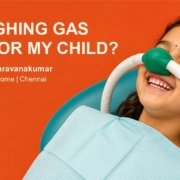
Sedation Dentistry for Kids: Is Laughing Gas Safe for My Child?
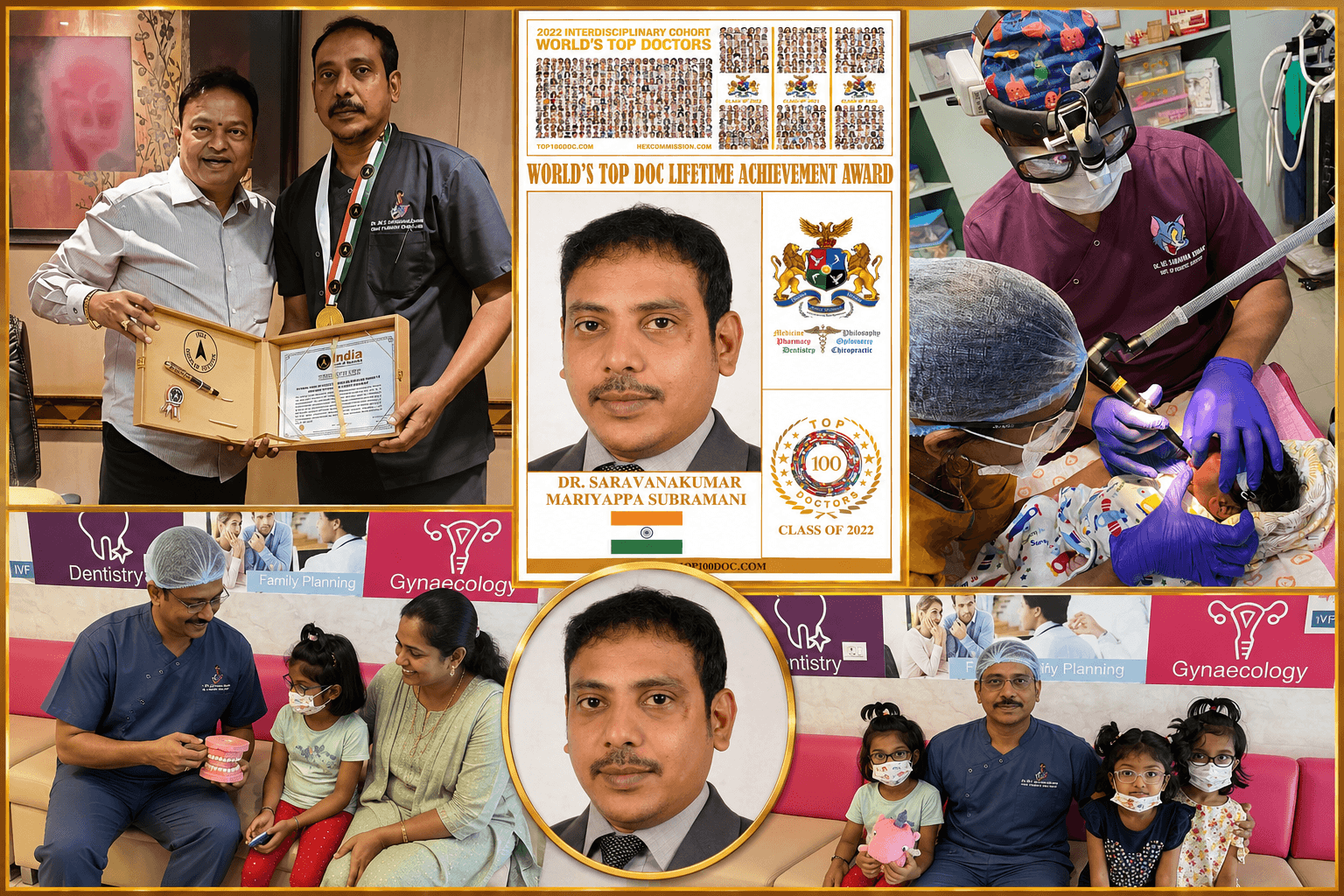
Prepared with inputs from Prof. Dr. M. S. Saravanakumar, MDS (Pediatric Dentistry), Kannmani Dental Home, CIT Nagar, Chennai · Published 20/11/2026
A child who cries at the clinic door, a tooth that clearly needs treatment, and a parent who has heard the word “sedation” and is now more frightened than the child. This is a familiar scene at Kannmani Dental Home in CIT Nagar.
Prof. Dr. M. S. Saravanakumar has used laughing gas for children for the past 10 years and has treated children under general anaesthesia since his postgraduate training.
Below he explains, in his own words where possible, what sedation dentistry for kids involves: what laughing gas is, what your child will feel, who should not have it, and when a child needs mild sedation or general anaesthesia instead.
What is laughing gas, and is it safe for children?
Laughing gas is nitrous oxide mixed with oxygen, breathed in through a small mask over the nose. At the clinic it is called “happy gas” or “happy air”. The American Academy of Pediatric Dentistry (AAPD) states that, used judiciously, it is a safe and effective way to control dental anxiety in children, adolescents and people with special health care needs.
It is a light, or minimal, form of sedation. “The child will stay awake. That’s why it is called conscious sedation,” Prof. Dr. Saravanakumar says. The child can still talk, open the mouth wide when asked and put the tongue out. The protective reflexes (breathing, coughing, spitting) keep working. If a child goes to sleep, that is a deeper level of sedation, which laughing gas is not meant to reach.
He follows the AAPD guideline, which is used worldwide. In India, the Indian Society of Pedodontics and Preventive Dentistry and the South Asian Association of Pediatric Dentistry also give guidance to children’s dentists.
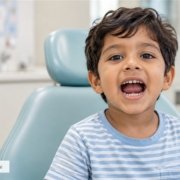
[IMAGE: illustration of a smiling child in a dental chair wearing a small coloured nose mask, a parent beside them. No photo of a real patient. ALT: “Child breathing through a flavoured nose mask in a dental chair, sedation dentistry for kids”]
What we try first with a scared child
Laughing gas is not the first step. The clinic’s approach starts before the child sits in the chair:
- A phone consultation first. Children’s dentistry at the clinic begins with a call, so the team knows in advance about tantrums, fears or anything else that matters.
- Meeting the child in the reception. The team welcomes the child there, not in the treatment room.
- Getting used to the clinic. Distraction with a TV screen, talking or music, plus plenty of positive talk and reassurance, settles many children.
- Laughing gas, or mild sedation, only if these are not enough.
He will not force a child into sedation. Holding a child still with a papoose board or Velcro straps (dentists call it protective stabilisation) is, in his words, “the last thing we consider”. He uses it only after every other approach has been tried, and only with the parents’ consent.
How we introduce the “magic nose”
The mask is introduced in the reception, before the child is anywhere near the dental chair. It is coloured and scented, with a strawberry or bubblegum smell, and the child is invited to smell it and practise breathing in and out. He calls it the “magic nose”, or for some children a “parrot nose”. “I feel like telling this will really make them ease and make them comfortable,” he says.
Then he tells the child what to expect: “This is going to make your tummy feel light, and you may also feel like floating, and you might feel like you’re going in a giant wheel or something like that.”
He remembers one child who would not come into the dental chair at all. The team went out to the reception, showed the mask, explained the happy air, and the child became comfortable enough to go ahead. A flavoured mask, he says, makes a real difference.
From what age can a child have laughing gas?
Usually from about three or four years. Laughing gas works only when a child understands what is happening, lets the team place the mask, and breathes through the nose. “Below three years, this understanding is not possible, and we advise not to use below three years,” he says.
It also needs a child who is anxious but willing to cooperate. Laughing gas reduces anxiety and improves cooperation, but it cannot make an uncooperative child cooperate.
Does my child still need the numbing injection?
Yes. Laughing gas calms the child; it does not numb the tooth. “There is no replacement for local anaesthesia,” Prof. Dr. Saravanakumar says. A numbing gel goes on the gum first, then the local anaesthetic is given to the tooth or tissue being treated. A calmer child usually finds this step much easier.
Which treatments is laughing gas used for?
Mostly for short procedures: fillings, extractions, pulpectomy (root canal treatment of a milk tooth) and tongue-tie release in older children. Longer or more extensive treatment may need a different plan, as explained below.
Who should not have laughing gas?
He does not use laughing gas when a child has:
- a blocked nose or sinusitis, because the child cannot breathe through the nose;
- an ear infection;
- a recent surgery;
- a chest or breathing problem, or any respiratory infection that affects breathing;
- vitamin B12 deficiency. Nitrous oxide inactivates vitamin B12. A review in the Journal of Dental Anesthesia and Pain Medicine describes this as rare but serious in people who are already deficient. If a child looks anaemic, he may ask for a B12 blood test first.
Before treatment he asks for a fitness check, mainly of breathing. Beyond these conditions, he says, laughing gas can be used for most children. Tell the dentist about any illness or medicine, including asthma.
Before the visit: food and preparation
At Kannmani Dental Home, the instruction is a very light meal about two hours before, then nothing more to eat or drink until the visit. Prof. Dr. Saravanakumar explains that this lowers the chance of nausea and vomiting, and that fasting much longer than needed can itself bring on vomiting.
AAPD guidance agrees that strict fasting is not needed for laughing gas on its own: a light meal is often suggested, and a heavy meal beforehand makes side effects more likely. Fasting rules are stricter for sedation (see below).
At home, keep the description simple and positive. The team will introduce the mask and the “happy air” at the clinic.
During and after: how long does laughing gas take to wear off?
During treatment, the team watches the child’s oxygen level and pulse rate on a monitor. At the end, the child breathes 100% oxygen for three to five minutes.
This clears the gas from the body and prevents a dip in oxygen that dentists call diffusion hypoxia, a step the AAPD guideline also describes.
After that, most children are back to themselves within minutes:
- Going home and school: the child can go home and can go to school the same day. Keep activities light for the rest of the day, with no hard play.
- Eating: start with water, then a normal, soft diet that is not spicy or hard. If a tooth was numbed, wait until the numbness wears off before chewing.
- Side effects: uncommon and short-lived. In Prof. Dr. Saravanakumar’s experience, about 2 to 3% of children feel sick, vomit or get a headache, and vomiting alone happens in 0.5 to 5% of children, mostly when the food instructions were not followed. AAPD guidance puts nausea and vomiting, the most common side effects, at 0.5 to 1.2% of patients.
Can a parent stay in the room?
Yes, a parent can be with the child while laughing gas is used. The clinic uses a scavenging system that removes the gas the child breathes out.
Even so, he does not advise a pregnant mother to stay close by, particularly in the first trimester. If the mother is pregnant, it is better for another parent or family member to accompany the child, and to tell the dentist beforehand.
Laughing gas, mild sedation and general anaesthesia: what is the difference?
| Laughing gas | Mild (oral) sedation | General anaesthesia | |
| Is the child awake? | Yes, relaxed and able to talk | Calm and may be drowsy, but still responds when spoken to | No, fully asleep |
| How it is given | Through a nose mask | A sweetened syrup by mouth | By a paediatric anaesthetist |
| Where | At the clinic | At the clinic | In a well-equipped paediatric hospital |
| Typical use | Anxious but cooperative children, short procedures | High fear, a restless child, longer work or a strong gag reflex | Many cavities in a child who cannot cooperate, very young children, some children with special needs |
Mild sedation
When laughing gas is not enough, Prof. Dr. Saravanakumar may consider mild sedation, given as a sweetened syrup. How deep the sedation goes depends on the medicine and the dose, not on the syrup form, and the fasting, monitoring and staffing follow the level of sedation intended.
He uses it for four reasons: high fear or anxiety, a restless child who cannot sit still, extensive or complicated procedures, and a strong gag reflex. He uses oral sedation far less often than laughing gas. Sedation by injection into a vein (IV sedation) is done only with an anaesthetist, in a hospital.
Fasting is stricter for sedation. He follows these rules: no liquids for two hours before, breast milk allowed until four hours before, and no solid food for six hours before. The safety set-up includes oxygen, monitoring, emergency medicines and a team trained in basic and paediatric advanced life support, in line with the joint American Academy of Pediatrics and AAPD guideline on sedation for children.
In minimal sedation, a child still responds normally when spoken to and breathing is usually not affected. Deeper sedation can slow or block breathing, which is why sedation needs this monitoring and a trained team, and why deeper levels are given only with an anaesthetist.
General anaesthesia (sleep dentistry)
“Normally we tell it’s a sleep medicine,” he says. Sleep dentistry here means dental treatment under general anaesthesia. (The term is sometimes also used for treating sleep-related breathing problems.) He recommends it when:
- a child has many cavities and cannot cooperate for treatment in the chair;
- a child is under three or four years old and other approaches are not possible;
- a child with special needs, such as autism or cerebral palsy, cannot be treated any other way.
The treatment is done in a well-equipped paediatric hospital, and the anaesthesia is given by a trained, experienced paediatric anaesthetist.
Will sedation harm my child’s brain? Can laughing gas become addictive?
These are the two worries Chennai parents raise most often.
Addiction: nitrous oxide can be misused recreationally, which is where its reputation comes from.
Prof. Dr. Saravanakumar explains that in medical and dental use the dose is measured and controlled, given for a short time by trained hands, and addiction from this use has not been reported.
The brain: the best evidence so far is reassuring for a single short anaesthetic. The GAS trial, published in The Lancet in 2019, followed 722 infants and found that slightly less than an hour of general anaesthesia in early infancy did not change neurodevelopmental outcome at age five.
Questions remain about longer and repeated exposures. In 2017 the US Food and Drug Administration warned that prolonged or repeated anaesthesia in children under three might affect brain development. This is one reason dentists try to finish treatment in as few sessions as possible, and use general anaesthesia only when it is really needed.
Children with autism and other special needs
If a child with autism or other special needs can accept the nose mask, he tries laughing gas. If not, he considers oral or IV sedation, or general anaesthesia when treatment cannot be done safely any other way. The phone consultation before the first visit helps the team plan for the child’s needs.
A pattern he sees often: “My child is not eating”
Many parents come to him because the child is not eating well and is not gaining weight. Some have already tried appetite syrups from several doctors. Often the cause turns out to be the teeth: decayed milk teeth are sensitive and painful, so the child spits food out or swallows without chewing.
He explains it to parents like this: “Do you feel that the grinder or a mixie works if they don’t have a proper cutting efficiency?” Without healthy teeth, a child cannot chew properly.
When a child has many decayed teeth and is too young or too frightened for treatment in the chair, he treats them under laughing gas or general anaesthesia, so the child can chew and eat again.
Our guide to tooth decay in milk teeth explains the treatments involved, and our guide to toothache in children covers the warning signs.
How laughing gas has changed in India
Ten to fifteen years ago, he recalls, children visiting from abroad would ask, “Do you have happy gas?” At that time nitrous oxide was not widely used in Indian dental clinics.
It has since become much more common, and dentists now train in it through proper skill programmes.
Frequently asked questions
Is laughing gas safe for a 3-year-old?
Age matters less than understanding. Laughing gas works when the child accepts the mask and breathes through the nose, which usually happens from about three to four years. Prof. Dr. Saravanakumar advises against it below three.
For a very young child with extensive decay, general anaesthesia in a hospital may be the safer plan.
Will laughing gas put my child to sleep?
No. With laughing gas the child stays awake, relaxed and able to talk and follow instructions. If a child needs to be asleep for treatment, that is general anaesthesia, given by an anaesthetist in a hospital.
Can my child have laughing gas with asthma?
Tell the dentist about asthma before the visit. Prof. Dr. Saravanakumar checks breathing fitness first and does not use laughing gas when a breathing problem or respiratory infection affects the child’s breathing. A child with a cold or blocked nose should have the visit moved.
How much does laughing gas cost?
At Kannmani Dental Home, laughing gas costs ₹1,500 to ₹3,000 per visit, depending on how much is used. This is in addition to the treatment itself.
சிரிப்பு வாயு (லாஃபிங் கேஸ்) குழந்தைகளுக்குப் பாதுகாப்பானதா? (Is laughing gas safe for children?)
பயிற்சி பெற்ற பல் மருத்துவர் சரியான முறையில் கொடுக்கும்போது, பயப்படும் குழந்தைகளை அமைதிப்படுத்த சிரிப்பு வாயு பாதுகாப்பான, பயனுள்ள வழி. குழந்தை விழித்திருக்கும், பேசவும் முடியும். பொதுவாக மூன்று முதல் நான்கு வயதிலிருந்து பயன்படுத்தப்படுகிறது.
In English: when given properly by a trained dentist, laughing gas is a safe and effective way to calm a frightened child. The child stays awake and can talk. It is usually used from about three to four years of age.
Sedation dentistry for kids at Kannmani Dental Home, CIT Nagar, Chennai
Kannmani Dental Home is a dental clinic in CIT Nagar, Chennai, focused mainly on children’s dentistry. It is led by Prof. Dr. M. S. Saravanakumar, MDS (Pediatric Dentistry). He has used laughing gas for about 10 years and has treated children under general anaesthesia since his postgraduate training. He has treated more than 3,500 children, and between 800 and 1,000 with laughing gas.
- Consultation: ₹500 to ₹1,000
- Laughing gas: ₹1,500 to ₹3,000 per visit, depending on how much is used
- Mild sedation and general anaesthesia: explained at the consultation. The cost of general anaesthesia depends on the hospital, the anaesthetist’s and operation theatre charges, the materials used and the number of teeth treated.
Kannmani Dental Home
3/63, 5th Main Road, CIT Nagar, Chennai 600035
Phone: 91763 16667
Open every day, 10 AM to 9 PM
Book an assessment
If your child had a tongue tie released as a baby, or you are expecting, see our guides to tongue tie in babies and dental treatment during pregnancy
This article is for general information and does not replace an examination by a dentist. Whether laughing gas, sedation or general anaesthesia suits your child depends on their health and the treatment needed, and is decided at the consultation.
How this article was prepared: The medical content in this article is based on Prof. Dr. M. S. Saravanakumar’s own clinical experience and the reliable published sources cited below.
Sources
- American Academy of Pediatric Dentistry. Use of nitrous oxide for pediatric dental patients. The Reference Manual of Pediatric Dentistry 2026:439-446 (latest revision 2023). aapd.org
- Coté CJ, Wilson S; American Academy of Pediatrics, American Academy of Pediatric Dentistry. Guidelines for monitoring and management of pediatric patients before, during, and after sedation for diagnostic and therapeutic procedures. Pediatric Dentistry 2025;47(6):E100-E128. aapd.org
- Chi SI. Complications caused by nitrous oxide in dental sedation. Journal of Dental Anesthesia and Pain Medicine 2018;18(2):71-78. ncbi.nlm.nih.gov
- McCann ME, de Graaff JC, Dorris L, et al. Neurodevelopmental outcome at 5 years of age after general anaesthesia or awake-regional anaesthesia in infancy (GAS). The Lancet 2019;393(10172):664-677. ncbi.nlm.nih.gov
- The Lancet press release. General anesthesia is unlikely to have lasting effects on the developing brains of young children, 2019 (includes the 2017 FDA warning). eurekalert.org
- Wirral Community Health and Care NHS Foundation Trust. Information for parents and guardians on inhalation sedation, 2025. wchc.nhs.uk
- Great Ormond Street Hospital for Children NHS Foundation Trust. Inhalation sedation for dental procedures. gosh.nhs.uk
- Leeds Teaching Hospitals NHS Trust. Inhalation sedation: under 16 years old. leedsth.nhs.uk